Mercedes-Benz Classic Center

041108 1744 mercedesben112 Mercedes Benz Classic CenterMercedes-Benz Wants to Sell You a Nice Used Car for $775,000

Review by Jason H. Harper, Bloomberg

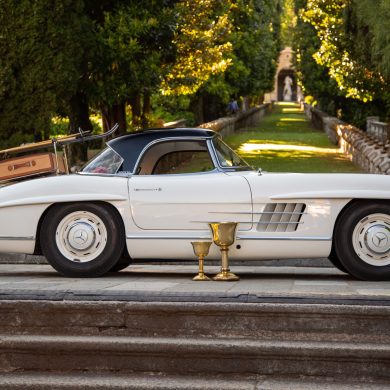
Driving in posh locales such as Malibu, among the Ferraris and Bentleys, can be an ego-bruising experience. Today, though, I’m looking like a Hollywood player, behind the wheel of a classic Mercedes-Benz, salty wind blowing in my hair. In fact, I’m motoring along the Pacific Coast Highway in a beautifully restored, 1969 280 SL roadster.

The world of collector cars is an intimidating one. Like rare antiques or high-priced art, it’s easy to get suckered unless you know your stuff. (“Totally original equipment. Really!”) And it’s not like you can walk into a showroom and just point to the one you want.

Hold that: Actually, you can. Two summers ago, Mercedes-Benz opened up a shop in Irvine, California, that redefined the concept of buying a “used car.” Stop by the Classic Center showroom and you might drive out in a 1967 250 SL roadster for $95,000 or maybe that outrageous 1928 Mercedes-Benz 630 Saoutchik Dual Cowl Phaeton with a supercharged engine for $775,000.

Not only are the cars drivable (not always a given in the business), but Mercedes promises they’re authentic and technically correct (definitely not a given).

After all, the company has an unparalleled handle on their autos’ provenance, going back to original records whenever possible and providing a certificate listing information such as vehicle, body and engine numbers and original options. (My 1969 SL included an optional left-side “outside rearview mirror.”) As the center’s tagline boasts: “For sale by original owner.”

Museum Quality

The glass-encased showroom looks like a slick museum, and a number of cars are indeed from the company’s museum in Stuttgart, Germany, and not for sale. For those that are, I’m immediately provoked into a “gimme, gimme!” reaction.

The Classic Center sells 12 to 15 cars a year, from $30,000 to multiple millions, with the average running about $100,000. Even at those prices, though, there are no warranties. It’s one of the collectible market’s “owner beware” quirks.

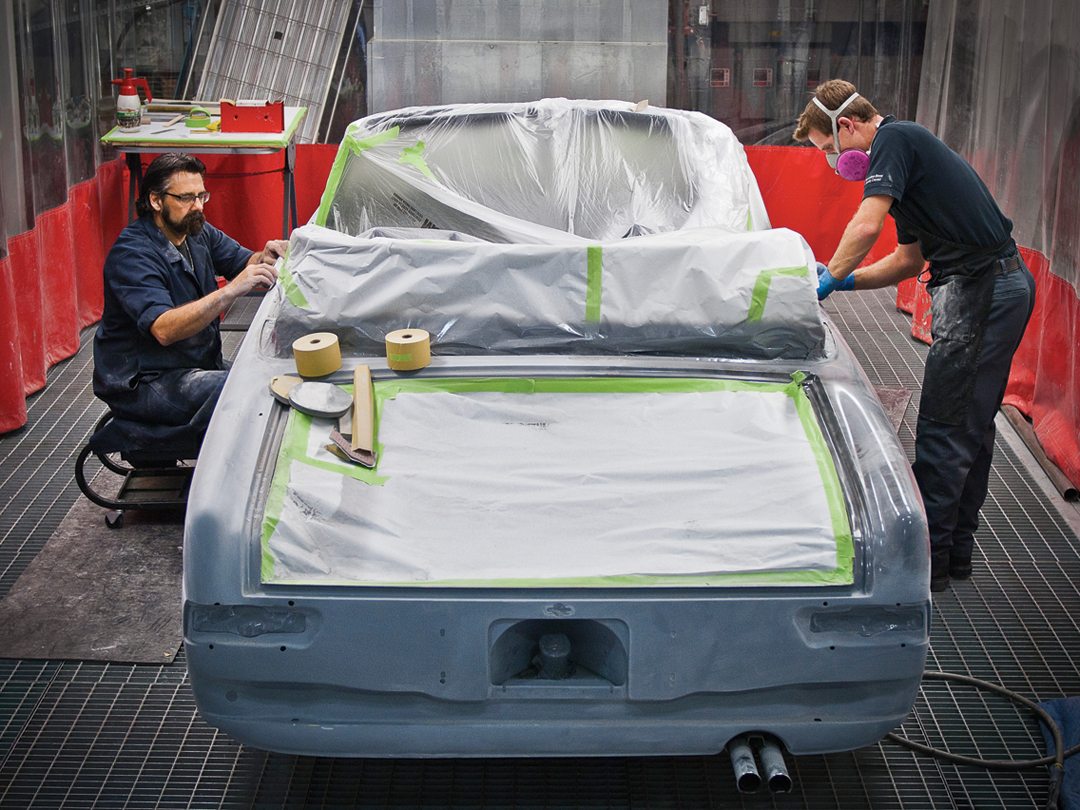
The center’s real moneymakers are replacement parts for old Mercedes cars and on-site restorations. Say you just bought a vintage Mercedes at auction and you want it to stop belching black smoke, or you prefer a full-blown show-worthy restoration. Either way, your corner garage assuredly isn’t up to the task.

Mercedes considers an auto that has been out of production for 15 years a classic. Bring one in and the center will do an in-depth inspection for about $1,200.

“It’s a road map to the rebirth of the car,” says Mike Kunz, manager of the center. It’s also an appraisal of how much work the car needs. “The whole point is to make it look like it was never restored.”

Full Restoration

The full works takes about 18 months and can run more than $250,000.

041108 1744 mercedesben212 Mercedes Benz Classic Center“At $105 an hour, with at least 2,000 hours of labor, you can see how it adds up,” Kunz says.

One significant advantage is the center’s access to hard-to- get parts. If original parts aren’t stored in Germany, Mercedes- Benz will remanufacture them from blueprints.

Authenticity makes a big difference in the market.

“A number of people restore Mercedes and do wonderful jobs,” says Dave Kinney, a collector-car expert who writes the “Auctions” column for Automobile magazine and is a senior member of the American Society of Appraisers. “But the Classic Center has all the original blueprints. There are very few times that you can take a car back to the company that made it and have them actually remanufacture parts for you. That has an extra stamp of authenticity, which helps the value of the cars.”

California Workshop

The U.S. center is the company’s second, after the original that opened in 1993 in Fellbach, Germany. When I stop into Irvine, the rear workshop has about a dozen cars being tended to by serious-faced workers. One guy is firing up a gorgeous 300 SL; some cars are stripped to their frames, as yet unrecognizable.

Kunz says the most popular cars are cabriolets, and buyers tend to be looking for the model they lusted for in their youth and couldn’t afford at the time. Now they can — even at classic car prices.

“We get a lot of software moguls, Hollywood people and Forbes 400 types,” he says.

The 1969 SL that I’m driving is so pretty that I can imagine it rolling out of the original factory looking just the same. Back then it would have cost less than $8,000; now it’s $60,000 at the center.

Driving around Southern California’s interstates with the top down, I’m tentative at first, not sure how the engine and brakes will hold up. Very soon, though, I’m tailing Porsches on Santa Monica Freeway.

You do have to deal with the original idiosyncrasies, of course. Putting the top up and down is a process involving a lever to disengage hooks, some pulling, pushing, snapping and banging. Not quite like the modern SL’s aluminum, remote- controlled top.

Nonetheless, as I fill up the tank in Malibu, where even the gas stations are kind of posh, another driver checks out the perfect paint and gleaming metal.

“You don’t often see them restored so well,” he says. Turns out he’s a collector. He squats down to scan the undercarriage. “Say, how much would you take for it?”

For more information about the center: +1-866-622-5277; http://www.mbusa.com/heritage/classic-center-california.do.

[Source: Bloomberg.com]

Leave a Comment