Interview by Dennis Gray Morris Kindig is Executive Director of the proposed Monterey Museum of Automotive Arts that aims to build upon the legacy of Monterey’s storied history with the automobile. Conceived to honor and recognize the relationship the automobile has with the Monterey Peninsula, the Museum will pay homage to the Pebble Beach Concours d’Elegance, Laguna Seca and the personalities that carried the flame for the automobile.
The planned 150,000 sq ft venue is designed to house over one hundred cars within the Pebble Beach and Laguna Seca wings and within main exhibition hall. In addition the facilities will include an active restoration area, theater, library, digital media center, members club, restaurant, banquet facilities, plus an art gallery, history and education center and retail store.
Morris sat down with Sports Car Digest to discuss the proposed Monterey Museum of Automotive Arts and his long relationship with cars. Sports Car Digest: Morris, let’s start by discussing your history. Morris Kindig: Professionally, I worked first as a mechanical engineer, then moved into marketing and product management, then eventually started a market research company focused on automotive electronics.
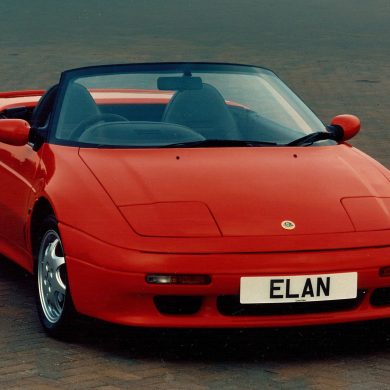
I’m a car guy, have been since I was a kid! I had my first sports car in college, an MG-TF 1500. Unfortunately, I sold it and got an Austin Healey. After college I bought a Lotus Elite, and I still have it along with a few other cars. SCD: What cars do you have in your personal collection? MK: I have a few antiques, Model Ts, 1914, 1925, 1927; and a 1917 Overland, which I raced at Laguna Seca in Steve Earle’s 2004 event. I have the parts for five or six more Model T Speedsters and enough Overland parts to build one or two more Raceabouts. I also have a couple of Lotus Elites, as well as a 30, a 23, and a Europa; two ’50s Rileys; a Ferrari Dino and a few other cars. SCD: With the exception of a red Lotus 30 that ran at last year’s Rolex Monterey Reunion and occasionally a white Lotus 30 I don’t see many 30s. MK: I have two that are unrestored. Another one, I restored and sold to Sanehiro Nozaki of Japan. Unfortunately, the car was not completed in time for the 1995 Monterey Historic Races tribute to Lotus, but it was featured in the Lotus exhibit that year. The car was finished in Lotus racing green with a yellow stripe down the middle. Sanehiro ran the car in 1996. SCD: Can you tell me about your Lotus Elite? MK: Absolutely an incredible car! I had never experienced any car that could handle so well. My first ride was with Rod Carveth in a right-hand-drive car. He took us out to the freeway, accelerated to about 65 mph and then exited the freeway! It was one of those moments you never forget, I was in the left-hand seat of a right-hand-drive car, no brakes or steering wheel, I thought my life was coming to an end. But we went around the corner and the car didn’t even squeal the tires. I put an order in for one a few days later. SCD: Did you know I spent my high school weekends and many summer days hitchhiking from Millbrae (California) to San Carlos then polishing Rod’s 250 Testa Rossa or his Aston Martin DB3S? MK: We were probably there at the same time. I was part of the pit crew for Rod when he drove the Testa Rossa and the Aston. Do you remember Max? SCD: Max gave me two rides in the 250, one down 101 and the other over King’s Mountain Road. The highlights of my high school years were those two rides. Carveth once gave me a ride up King’s Mountain in his Elite. Didn’t he live up there? MK: He lived off of Sand Hill Road in Portola Valley. It broke my heart when he sold the Ferrari to a guy in Texas, because I would have had my dad borrow the money to buy that car. SCD: They were just old race cars then… MK: That’s true, but they weren’t to me. SCD: After the Elite what happened? MK: That’s a good question because the Elite has been the most influential aspect of my life with automobiles. Just a few highlights: I bought the car in 1960, received it in California in 1961, actually showed it at Pebble Beach in 1962, which was the same year I started racing. I continued racing in 1963 and 1964 and, if you recall, the Elite was so raceworthy that it was reclassified from E to C production where it was no longer competitive. So I quit racing, autocrossed for a year, then undertook to restore the car for Concours. The first restoration wasn’t good enough to win, so I took it apart and restored it again. Then I won at Pebble Beach in ’69. In 1974 I entered Steve Earle’s first event at Laguna Seca and raced another 26 or 27 times in the Monterey Historics. SCD: Do you still race? MK: My last race was 2004. I raced a 1917 Overland Raceabout at Steve’s event. I do hope to get back on the track soon. This is a passion, I love to drive, I like to work on the cars, older ones that is. I don’t care much to work on modern day cars.
SCD: Can we jump ahead to the Museum? MK: The museum has been on my mind for a long, long, time. I am aware of some of the prior attempts to put a museum in Monterey, but never thought the proponents did a very good job of planning or promoting one. And, I never thought putting a museum at Laguna Seca would succeed. The demographics aren’t good enough to pull people from Monterey to the track.
About 25 years ago, I talked to Monterey Peninsula College about offering a program specializing in the skills of restoring cars. I thought this would be a good way for me to get started in Monterey. I envisioned being able to restore the cars and become actively involved with the local automotive scene, both in racing and Concours.
Family, and business commitments derailed that effort and it wasn’t until a couple of years ago that two of my friends said that it’s time…. if we were going to pursue our vision of a Museum and restoration facility, we needed to do it now. So, in February 2009 I wrote a letter to the City of Monterey outlining that vision and in March, met informally to ask what they thought about the idea. They were open to a proposal, but cautioned that there was no city money, water was an issue and they did not believe there was any suitable land. We noted the issues cited and expressed that we thought they were manageable within the scope of our vision. The meeting concluded without dissent or disagreement to our proposal to study the feasibility of a Museum
That was two years ago. In two years, with a dedicated team of volunteers, we have accomplished more than anyone could have expected. Our success even surprised us. We have garnered a lot of support and visibility within and outside the community as well as internationally. In addition to a lot more interest about the project. SCD: How far along are you in the process? MK: A little background will help a give you a sense of where we have come from to where we are today.
Our first introduction to the proposed museum endeavor was to publish an eight-page, four-color brochure for distribution at Laguna Seca, Pebble Beach, etc, during the 2009 August Automobile “Holy Week.” The response to a Museum was an immediate “Wow” followed by “Yes” with people stepping forward pledging support and saying they not only endorsed the idea, they would like to be a part of the endeavor. That was enough for us to know we had a vision that was viable, sustainable and marketable.
The next step was to see if we could sell the concept sufficiently to support the necessary funding, locate an outstanding site, and get the necessary buy-in from the surrounding cities and communities. We concluded that we must make the case for the Museum being all-encompassing and an important asset to the community by providing a year-round anchor complementing the Monterey Bay Aquarium. Further, the auto museum would stand as an icon to the Peninsula’s rich history of 60-plus years of racing and Concours. And not least, the benefits that accrue to the community through increased revenues, education and employment opportunities would be a recognized asset.
To make our case more tangible, we went to the New School of Architecture in San Diego, and asked if their most innovative architectural students could build a Museum concept model for us. The school agreed and made it a graduate class project that resulted in 16 designs, five of which were commissioned for presentation during 2010 Holy Week. These models brought the ideas alive and validated our commitment to the endeavor.
At Holy Week last year, 2010, we had five models on display throughout the Monterey Peninsula at Automobilia, the Ferrari Event at Chateau Julien, Concorso Italiano, Legends of the Autobahn, Hilton Hotel, Hyatt Hotel and the BMW Dealership.
As a result of this strategy, we were successful with media interviews, making the Tuesday evening TV News at 5, 7 and 11, and Wednesday morning front page of the Business section of the Monterey Herald. Saturday, the Salinas Californian published a story about us. The coverage generated an enormous amount of exposure relative to our endeavors, including inquiries and offers for locations to build as well as funding. Over that week, with the news coverage, our presence at various venues and the engaging discussions that ensued, we established our credentials that we were serious, committed and had the support of the automobile enthusiasts, as well as the community at large. It was invigorating to see so much support. SCD: Are you close to meeting your target in donations? MK: Not yet. We are rapidly moving through the early stages of fundraising, and simultaneously talking to many people. Plans and programs are being formulated to hold a series of fundraising events, sponsored by individual donors and corporations. Our first sponsored event this year was on April 9, hosted by Bill and Mary Highland at the “On the Road Again” Classic Restorations in Morgan Hill. We are currently working on some club events and in the planning stages of a major invitational event in Monterey during August. Discussions with principal donors, Angels, are ongoing. SCD: Why would one donate to the Museum? MK: I think of it from the standpoint of how we remember the automobile, the people who built, raced, drove and loved them; and how we can uniquely capture that spirit for ourselves, our children and our grandchildren. Monterey has this incredibly rich history with the automobile that is chronicled in a video we produced on our website called “100 Years… and Still in Love with the Automobile.” If you think about it, this is really the place to have a museum, a world-class museum. It is virtually impossible to find another location that has the history of racing and Concours within one of the most beautiful ocean settings in the world. Highway 1 is the most filmed location in the world for automobile industry advertising. That has to tell you something about the automobile and the Monterey Peninsula.
Is there a selling point? I think it is the fact we are doing something quite different. The unique relationship of Monterey and the automobile provides a willing and enthusiastic base upon which we can espouse the societal values and benefits derived from the automobile…. recognizing the past, embracing the present and enlightening one to what the future will provide. It’s wonderful to see automotive collections housed within Museums, but too often there simply is not the dynamic exposition of the content in the perspective of the industry, the technologies and its relationship to society. The history of the automobile is justification enough for a museum, but rarely does one have the backdrop of an internationally known racetrack and Concours that brings hundreds of participants and thousand of enthusiasts who care and understand our mission to preserve, collect and educate. Another notable aspect is this will be a place where those who have a passion, want to be involved as a docent, help with restoration or teach and mentor their skills can participate.
For example, we have the opportunity through our education and restoration programs to work with the automobile industry and present a unique curriculum dedicated to the extraordinary value the automobile has provided us. It is packaging untold stories that will link the heritage of the automobile to the future of personal transportation. The heritage is critically important and we are losing it because the people who own, know and maintain these cars are passing on. We are also losing libraries, and the integrity of holding collections together that we want to preserve and present for history’s sake!
I don’t envision a Museum that only houses a static collection of automobiles that look nice but never run. The mission is to drive these cars, to put them on the road, make them visible and entertain people as well as educate them. To do this requires a comprehensive educational and restoration program that serves the needs of the Museum plus supports private and commercial interests. In addition, education in the arts of restoration provides a means for a career path supplementing and replacing those who restore cars today. In all, we want to think beyond the sheet metal and support a dynamic infrastructure that equally serves the community. SCD: If the city has no land or water, have you found land and water the city may have missed? MK: We have some very creative proposals to the main concerns of water and energy in the area. Collectively they will help everyone involved. Considering a location within the Monterey Peninsula, there are many opportunities to support the vision. The former Fort Ord property is a prime example, as it is now deeded to Seaside, Marina and Monterey, and there is property in Carmel Valley. We have been approached by multiple entities within the peninsula cities regarding redevelopment and new development projects to consider as a location. Once the current “confidential” negotiations are finished, I’m confident the community will be very supportive! SCD: How many square feet will there be in the museum, and how many parking spaces do you see? MK: The current Museum layout envisions 150,000 sq. ft. of useable venue area that includes exhibit space for 100 to 125 cars, an assembly area for final restoration projects, theater/banquet hall, restaurants, library/media studio, mercantile space, children’s center, conference space and administration offices. There are other facilities, but those are the main ones. Underneath the multi-level building will be storage facilities and a garage parking area for about 300-350 cars.
The restoration, educational and vocational facilities are separate in a building of about 60,000 to 80,000 sq. ft. The final assembly of a restoration will actually occur in the museum. SCD: Is there a tax advantage to showing a car or the long-term display of a car with the museum? Why would someone park his or her car in your museum? MK: Well, being the nice guys we are, we’re going to give them the best place in the world to show their car and a whole lot of people are going to be able to appreciate it. We will work to provide a good history on each car along with a profile of ownership. For sure, it’s going to be a hallmark museum, world class. We have the support from the enthusiast side, from those we have talked within the auto industry, potential donors and from other museums. Feedback to our plans is a resounding, 99 percent positive. There are just no negatives coming forward that indicate we should be concerned about our vision.
As to the taxable situation, the Automotive Heritage and Preservation Foundation is a registered and approved 501(c)(3) non-profit organization. All donations to the foundation are tax deductible within the allowable terms and conditions provided by the IRS, just as any other charity. As a foundation, it is the underwriter of the Monterey Museum of Automotive Arts, chartered to raise the necessary funding and providing oversight in the development of the museum, the education and restoration programs.
SCD: How far along are you in the process? Do you have an “Open Door” date? MK: We have accomplished an incredible amount in two years that we could not have expected. And, I don’t want to let that momentum escape. It is an aggressive plan. With due diligence on our part, we expect to announce the site location in August at Holy Week. Site negotiations are ongoing. We have a major milestone to accomplish in the next few months regarding the site that will set much of our future schedule.
The general program requires that we go through the architectural design specification process, open a competition for design proposals, select the design and award contract(s) to break ground in 2013. The plan is to open the doors in August 2015. Albeit, a very aggressive schedule, we are convinced it is doable. SCD: How will you go about stocking the museum with unique automobiles? MK: In a number of ways. First, we have some great cars already pledged to the museum. As soon as we have storage facilities and take possession we will announce the gifts. Second, we also have a number of people who have offered to lend or consign their cars to get the museum launched. Third, there is no shortage of great cars here in the Monterey area and throughout Northern and Southern California to meet our needs. There are more cars available than the museum can house at any one time, so offsite storage for the very best will be part of our mission. As mentioned before, the museum will display between 110 and 120 cars, that’s throughout the whole exhibit space. SCD: Do you have in place a plan on how you will curate the museum? MK: We have an interesting view of that question in a sense that we will look at every make of automobile that has graced the roads from the earliest automobiles in Monterey, Carmel, Pacific Grove and Pebble Beach to present day. We will recognize and honor the first automobile race held in 1914, and dedicate exhibit space to the races and race venues of Pebble Beach and Laguna Seca and everything through to the current Pebble Beach Concours d’ Elegance. We plan to have those exhibits to be very dynamic and constantly changing. We’re going to put a lot of high tech into the museum in order that we can tell the stories about the people and the cars, making it an “up-close and personal experience” as opposed to just looking at a bunch of cars. In a similar view, there will be several curated exhibits that look at all types and classes of automobiles, comparing style and contrasting technologies. SCD: How much thought have you given to the lighting of the displays? Will you have lighting designer on board? MK: We clearly understand how important the role of lighting plays in a museum, and will have the best lighting designer we can find. I have an engineer in mind capable of designing the lighting for the cars. Black background and a black curtain drop is just not going to make it for us.
In addition to lighting we are looking at a number of unique technology systems. One being considered involves electronic perimeter sensors that allow a visitor to view the vehicle unobstructed yet if he walks within 12 inches it will politely tell him to step back. Another item is a sound cone where an individual can enter a space and hear a recording about the car, but the person two feet away cannot hear the recording. SCD: What is the next step? MK: Our major efforts are to conclude the site negotiations and accelerate the fundraising in every dimension. By the end of the year we should be working with the architects who want to bid, and refining our preliminary timeline of the milestones between now, 2011, and 2015. In addition, we expect to have major commitments of our capital campaign in place by 2013. SCD: Can you be a little more specific on what cars you will have, will there be Can-Am and Champ Cars from Laguna? MK: Definitely, USRRC, Can-Am, F5000, Champ Car, Trans-Am, SCCA and the Historic races are primary to the history of what has been raced at Monterey. Current racing such as ALMS, Rolex and even the MotoGP will also be part of the exhibits. Because we have so much history of big races and such a close relationship to that history, the earlier cars will likely remain the most relevant. Note, that will not dissuade us from putting other kinds of cars in special exhibits. Even to the extent of Formula One, concept cars, Hot Rods and an occasional production car may find floor space.
We know some of the racing groups and concept design people in Detroit. As an example we have contacts into Roush and Penske, we are talking to the Racing in America group that is part of the Henry Ford Museum. And, we’re talking with a number of car companies. I know some of the Lotus people and I have good friends in Europe who know a number of the F1 engineers and parts suppliers. We expect to develop some support programs with them. In light of the above we should not forget the exhibits of Classic Cars in the Pebble Beach venue or those shown in the Collectors Showcase. These cars will share equal billing to the racecars. SCD: What about a simulator? MK: Yes, absolutely simulators, maybe five or six so we can hold races between the cars, not just solo. We need to have them for the race crowd and our future drivers. I would like to set up a series of races as competition for a regional or maybe a world championship. SCD: How are you going to bring younger kids and adults in the door? MK: I believe to get children involved you must create excitement and something memorable. We have the advantage of having great educational materials, from engineering to science to sociology. Give me the space, let me have access to the kids, 6, 7, 8 years old. I’ll take them for a ride in my Model T Speedster, and they will be mine! They’ll never forget it, and that is all I want. We will continue to do events and educational programs to excite the kids, get them more involved, teach them about the sciences and work with their parents and friends.
A major emphasis of the education program is to work closely with the high schools and mechanically inclined students who like to work with their hands. As an integral part of the education mission we plan to institute a full automotive restoration science curriculum as a vocational adjunct to Monterey Peninsula College’s Automotive Tech Program. Because the vocational school will work with the primary restoration operations affiliated with supporting the museum’s work, it will also offer internship and apprenticeship programs.
There will be at least five main segments of study in the school: body, chassis, power train, interior and documentation within our restoration facility. Our goal is to have the school operating in two years. We are currently working on the program details and looking at locations to house the restoration facilities.
We have talked to a number of restorers who have expressed their need and the increasing demand for skilled, talented, trained individuals. The intent will be to model the school after the best programs in the country. A similar program is offered by McPherson College. I have met with them, discussed their program and took a tour through their facilities. There is also a new tech school in South Dakota that specializes in Hot Rods. So I plan to visit them to learn more about what they are doing. In addition, I believe the synergy of the museum and the environment of the racetrack, Concours, etc., will allow us to offer a more encompassing and engaging program than is available elsewhere. SCD: Any last thoughts? MK: Our first goal has been met – we know from the hundreds of people we have talked to that the belief and undying commitment we have made is important to everyone, that this is a good idea. And those who believe it is a good idea need to step forward with financial help. We are at a critical stage of fundraising right now. We need to add staff to meet the planning and development goals of the project. This is no small matter when building a world-class museum with an educational school and restoration facilities. It is estimated to cost $110 million to open the doors. We are challenged by the numbers but not deterred. There is no reason this project cannot be funded. It is a project worthy of all who love and care about cars, because it is your museum.
This is the most exciting project I have ever been involved with. It’s especially important to me since the vision can become part of our culture, shaped by the hundreds of people who will create, develop and manage the Museum. There are untold tasks that need attention; marketing the vision, writing business plans, designing facilities, creating the exhibitions, managing operations, developing curriculum, teaching and restoring cars. And, then we can take pride in knowing that thousands will re-connect, remember and re-tell the stories of their “love affair with the automobile” and, just maybe, in the process find new meaning and appreciation for the automobile.
We need everyone to step up and be counted! Support it to the best of their ability, be it with money, cars, libraries or as a volunteer. It is often quoted and true that “it takes a village to raise a child,” there is no difference here, we are pregnant with a vision and need your support to give life to sustain “Our Love for the Automobile.”
“We must welcome the future, remembering that soon it will be the past; and we must respect the past, remembering that it was once all that was humanly possible.”—George Santayana
—
For more information, visit www.montereyautomuseum.com.
[Source: Dennis Gray]
No Subscription? You’re missing out
Get immediate ad-free access to all our premium content.