Worldwide Auctioneers, The Auburn Auction, Auburn, Indiana, August 31 – September 1, 2012
Report and photos by Rick Carey, Auction Editor
There couldn’t be a better venue for The Auburn Auction by Worldwide Auctioneers than the Auburn Automobile Company’s L-29 Assembly Building, now the site of the National Automotive and Truck Museum of the U.S.
It was a dramatic and welcome move for this year’s fifth anniversary of the Auburn Auction.
Consider the positives:
It supports and increases the visibility of NATMUS;
It is at the center of the Labor Day weekend Auburn-Cord-Duesenberg Festival, facilitating an awareness of the Festival’s many activities that hasn’t been practical with auction locations out of town;
It is, uniquely among all collector car auctions, set in an actual classic car factory that exudes character and history.
There were some disadvantages, but ones that experience (and a little money) will mostly quickly dispel:
The venue’s capacity was strained to present this year’s 124 vehicles;
Lighting inside the factory building for previewing is erratic;
The air conditioning needs help; and
The layout prevents the cars from being driven across the auction block;
To deal with the latter Worldwide employed big screen video, often live and real-time, of the cars when they were being auctioned.
The Worldwide team dealt very successfully with the venue’s challenges, which were overall more than offset by the ambience of the historic location.
Another unique decision was Worldwide’s designation of the sale’s first day as ‘All-Ford Friday’ in recognition of the Early Ford V-8 Foundation’s project to re-create the Ford Rotunda building in a new museum focused on the flathead V-8 era, 1932-53.
They also brought great food to the site. In fact, it’s worth coming just for the grilled chicken, and I don’t say that lightly about grilled chicken.
The numbers? 124 cars offered, 88 sold for a 71% sell-through. Two-day total of $5,258,250 with a mean sale of $59,753 and median of $38,000 (63.6% of the mean).
The top sale, appropriately enough, was the 1934 Auburn 12 Salon Cabriolet for $473,000. Twelve cars brought hammer prices of $100,000 or more.
Lot # 1 1907 Ford Model S Roadster; S/N 2517; Red/Black leatherette; Estimate $75,000 – $100,000; Concours restoration, 2+ condition; Hammered Sold at $30,000 plus commission of 10.00%; Final Price $33,000 — RHD. Acetylene headlights, E&J kerosene sidelights, Neverout taillight, Rubes bulb horn, red spoke wheels, black tires. The last iteration in Henry Ford’s concept of a lightweight, reliable, inexpensive automobile before the introduction of the Model T. An older show quality restoration. Engine is covered in oil mist but chassis is clean and essentially unused. Still nearly show quality. Burr Joslin Estate. No Reserve. This is nothing if not a huge value in a rare and significant model that occupies an important place in the history of the automobile. If there wasn’t a (fairly successful) Model S, there wouldn’t have been a Model T. Its condition is nearly show-ready, needing only a little elbow grease and brake cleaner to be displayed with pride.Lot # 2 1912 Ford Model T Torpedo Runabout; S/N 139941; Dark Blue, Black fenders/Black leather; Black leatherette top; Estimate $60,000 – $80,000; Older restoration, 2- condition; Hammered Sold at $41,000 plus commission of 10.00%; Final Price $45,100 — E&J Ford acetylene headlights, kerosene sidelights and taillight, black wood spoke wheels, white tires, bulb horn, Stewart speedometer. 1988 AACA National First Prize restoration still nearly show quality except for some dusty corners and dull interior brass. Engine is lightly oil misted but nearly like new. Burr Joslin Estate. No Reserve. A 2-year only body style from Ford and impressively accurately restored with correct vintage major parts, this is an especially attractive Model T for display or touring at a very reasonable price.Lot # 4 1928 Ford Model A Roadster Pickup; S/N A673209; Rock Moss Green, Black fenders/Black leatherette; Black leatherette top; Estimate $25,000 – $35,000; Older restoration, 2- condition; Hammered Sold at $23,000 plus commission of 10.00%; Final Price $25,300 — Painted bed floor, varnished sideboards, black wire wheels, blackwall tires, single sidemount spare with mirror, winged Ford Motometer. 1982 AACA National First Prize. A sound older restoration to like new with some age, and a few touched up paint chips but more than good enough to be displayed with pride. Burr Joslin Estate. No Reserve. Burr Joslin’s collection had an example of Fords from each decade from the 00’s to the 50’s, but three ’28 Model As. This Roadster Pickup is well worth its inclusion in the collection, a model that was usual beat to death during the depression. It is a sound value at this price, or several thousand dollars more.Lot # 5 1928 Ford Model A Tudor Sedan; S/N A39419; Green, Black fenders, Light Green accent/Grey broadcloth; Estimate $12,000 – $18,000; Cosmetic restoration, 3 condition; Hammered Sold at $8,000 plus commission of 10.00%; Final Price $8,800 — Yellow wire wheels, whitewalls, Motometer, windshield visor, rear-mounted spare, running board luggage fence with gallon fluid cans, trunk rack. Hot air heater exhaust manifold but without its shroud. Oil filter and hydraulic brakes. Burr Joslin’s first collector car, ‘Samantha’ was a member of the family since 1969. Cosmetically restored some years ago with plenty of miles since. Oily but orderly engine. Regularly used but sympathetically maintained. Burr Joslin Estate. No Reserve. A loyal family retainer pensioned off to someone who hasn’t learned to appreciate Samantha yet. Appreciation will come, though, and then this will seem like a huge value.Lot # 6 1936 Ford Deluxe Phaeton; S/N 182900167; Cordoba Tan/Tan leatherette; Beige cloth top; Estimate $40,000 – $50,000; Older restoration, 3 condition; Hammered Sold at $33,000 plus commission of 10.00%; Final Price $36,300 — Large hubcaps, trim rings, steel body color spoke wheels, whitewalls, enclosed rear spare. Good older paint over flat body panels. Good interior. Erratic chrome, particularly the windshield frame and grille. Orderly engine compartment. Chassis and underbody show age, use and neglect. An unusual and attractive but only driver quality Ford. Burr Joslin Estate. No Reserve. Even Henry had to get with the trend to streamlining to try to regain Ford’s momentum in the Thirties. The V-8 was a big advantage but the design changes that Edsel slowly brought to Ford were even more important. This is a rare and desirable open body style and it is a sound value at this price. A little work will remedy many of the use-related shortcomings and make it a much better car.Lot # 7 1948 Mercury Convertible; S/N 899A2194282; Light Yellow/Brown leatherette; Beige cloth top; Estimate $30,000 – $40,000; Older restoration, 3+ condition; Hammered Sold at $29,500 plus commission of 10.00%; Final Price $32,450 — Radio, clock, heater, bumper tips, dual remote spotlights, hubcaps, trim rings, whitewalls, underdash engine gauges. Good older repaint, major chrome, interior and top. Thin spotlight chrome, cracked steering wheel, delaminating vent windows. Straight, sound body. Once was restored like new and still very presentable and usable as is. Burr Joslin Estate. No Reserve. Even aged as this Merc is, it brought a modest price for a rare and desirable model and body style. It’s money in the bank.Lot # 8 1955 Ford Thunderbird Convertible; S/N P5FH194230; Yellow; Yellow hardtop/Black, Yellow vinyl; Black vinyl top; Estimate $30,000 – $40,000; Cosmetic restoration, 3 condition; Hammered Sold at $16,000 plus commission of 10.00%; Final Price $17,600 — 292/193hp, automatic, radio, heater, skirts, wheelcovers, narrow whitewalls, power seat, engine dressup, no P/S or P/B. Good older paint, chrome and interior. Engine compartment is done superficially but the chassis, frame and underbody have not received even that much attention same treatment. A presentable but superficial driver. Burr Joslin Estate. No Reserve. The Auburn bidders rightly spotted the many shortcomings of this T-bird and declined to offer more than fixer-upper money for it. This is correct fixer-upper money for an otherwise nondescript ’57 T-bird.Lot # 9 1932 Ford Model B Pickup; S/N AB5018056; Black/Black leatherette; Estimate $30,000 – $40,000; Recent restoration, 2 condition; Hammered Sold at $21,000 plus commission of 10.00%; Final Price $23,100 — Burgundy wire wheels, blackwall tires, painted steel bed floor with a rubber mat, pine bed sideboards, single sidemount. Hydraulic brakes. Represented as the original engine and transmission. Good paint, chrome and interior. Completely but not exceptionally restored to very good driver condition. How rare is this Model B? Real rare. It’s almost inconceivable that it’s survived in its original configuration let alone the ‘original steel’ body referenced in the catalog without becoming the basis for a wicked cool street rod. At this price it still could. It’s cheap.Lot # 10 1965 Ford Mustang GT Convertible; S/N 5F08K792638; Poppy Red/Red vinyl; White vinyl top; Estimate $50,000 – $60,000; Older restoration, 2- condition; Hammered Sold at $46,250 plus commission of 10.00%; Final Price $50,875 — 289/271hp K-code, 4-speed, console, A/C, Rally-Pak gauges, P/S, no P/B, Magnum wheels, narrow whitewalls, halogen headlights, front disc brakes. Restored to showroom condition, with a few upgrades, ten years ago. Looks like it was ten months ago. Very rare and desirable combination of options, particularly the K-code 271hp V-8. Not quite GT350 performance, but close enough to make it an easy rubber-burner on cruise night. The headlights, P/S, A/C and disc brakes added during restoration don’t really affect its value, but make it a much more satisfying driver. The price could have been a little higher without being expensive, but not by much.Lot # 11 1957 Mercury Turnpike Cruiser Hardtop; S/N 57WA44876M; Brown, Beige/Beige; Estimate $35,000 – $45,000; Cosmetic restoration, 3 condition; Hammered Sold at $22,000 plus commission of 10.00%; Final Price $24,200 — 368/290hp, pushbutton automatic, P/W including the Breezeway rear window, pushbutton radio, cruiser skirts, dual rear antennas, wheel covers, wide whitewalls, tachometer, dual outside minors, P/S, P/B. Sound repaint with some overspray, good interior. Clean and well restored underhood. Fair chrome, especially the scratched, thin bumpers and pitted headlight bezels. No Reserve. This Turnpike Cruiser was sold at Dave Rupp’s Ft. Lauderdale auction in 2009 for $19,710, then at Worldwide’s Escondido auction in 2009 for $18,755. It hit its big home run at Worldwide Houston four months ago with a price of $29,700. Maybe now it’s found a good long term home, but if experience is any guide it’ll be on another auction block soon. Its odometer today reads just 26 more miles than it showed over three years ago in Ft. Lauderdale, so no one has even managed to breathe the big engine for long enough to get the oil warm or their endorphins pumping.
Worldwide Auctioneers Auburn 2012 – Auction Report Page Two
Lot # 12 1936 Ford Deluxe Coupe 5-Window; S/N 183313512; Dark Blue/Beige cloth; Estimate $50,000 – $60,000; Recent restoration, 2+ condition; Hammered Sold at $32,000 plus commission of 10.00%; Final Price $35,200 — Banjo spoke steering wheel, crank out windshield, black steel wheels, wide whitewalls, rumble seat, enclosed rear spare, bumper overriders. Hydraulic brakes. Restored better than new without going overboard. Excellent, fresh cosmetics. A Dearborn Award winner and about as good as it gets. This is a little more car than the money it brought, especially for the quality of its restoration and the restoration’s preservation. Still, the result is fair for both the buyer and the seller.Lot # 13 1970 Ford Mustang Boss 429 Fastback; S/N 0F02Z110869; Blue/White vinyl; Estimate $190,000 – $230,000; Older restoration, 2- condition; Not sold at Hammer bid of $140,000 — 429/375hp, 4-speed, Hurst T-handle shifter, Magnum wheels, F60-15 Polyglas GT tires, pushbutton radio, P/S, P/B. Replacement ‘correct, date code’ engine. Restored like new with excellent paint, chrome and interior. Engine is dusty and a little oily. Underbody soiled with some muddy residue. A little detailing will go a long way. Until this Boss-Nine gets the attention it needs the seller should not expect to get more for it. A $5,000 detailing would make it a $160,000 car in today’s market but it’ll never be a primo collector car with the replacement block. The Auburn bidders were not paying premium money for a sub-premium car.Lot # 15 1941 Ford Special Coupe; S/N 186364354; Black/Beige cloth; Estimate $50,000 – $60,000; Recent restoration, 2- condition; Not sold at Hammer bid of $29,000 — Steel wheels, hubcaps, blackwalls, no backseat. Good paint with some flaws. Good interior and chrome. A rare sub-base model car with an unusually good restoration. Ford responded to the increasing focus on economy with the Special Coupe, a counter to Chevrolet’s Master Deluxe. Built for only one year and was severely ‘de-contented’ in modern parlance. Even the bumpers were carry-overs from 1940. Rarely seen, and never in this condition, it is a choice piece for a specialist Ford collector but less desirable in the mainstream. Apparently the only Ford collectors in the Auburn Auction were mainstream and they didn’t like this stripper, price-point Ford very much. It is a missed opportunity for someone who understands.Lot # 17 1957 Ford Thunderbird Roadster; S/N E7FH281008; White/Red vinyl; Black top; Estimate $110,000 – $130,000; Recent restoration, 1 condition; Hammered Sold at $95,000 plus commission of 10.00%; Final Price $104,500 — 312/270hp dual quads, automatic, Town & Country radio, chrome wire wheels, whitewalls, P/B. An over the top Amos Minter restoration. Better than perfect. Sold at Mecum’s Indy auction in May for $108,650, this illustrates the difficulty of flipping a top car from one auction to the next. Its value, however, isn’t going anywhere and recycling it for cash makes sense in the right circumstances.Lot # 18 1963 Ford Fairlane 500 2-Dr. Hardtop; S/N 3F47F194841; Black/Black; Estimate $20,000 – $30,000; Visually maintained, largely original, 4 condition; Hammered Sold at $6,000 plus commission of 10.00%; Final Price $6,600 — Started life with a base 260/164hp V-8 but now has a warmed up 302 with cam, dual point distributor and Edelbrock 4-barrel intake. 4-speed, cheap alloy wheels and tires. Dull repaint, rust blisters, thin, pitted chrome. Ugly and awful. This was a late replacement for the cataloged lot, a 1963 Lincoln Continental Convertible. A sad and despicable little car, it would have been better to reject it at check-in since it didn’t measure up to its decidedly optimistic owner’s description. It’s amazing it brought this much.Lot # 19 1955 Ford Fairlane Crown Victoria 2-Dr. Coupe; S/N U5DW158778; Black, White/White vinyl, Black cloth; Estimate $55,000 – $65,000; Older restoration, 2+ condition; Hammered Sold at $34,545 plus commission of 10.00%; Final Price $38,000 — 272/162hp, automatic, factory A/C, P/S, P/B, skirts, wire wheel covers, whitewalls. As good as it gets and an old Amos Minter restoration, beautifully maintained. AACA Senior award winner, meticulously maintained and presented. Bid to $34,500 on the block and closed later with this result, a modest result for a meticulously maintained high quality older restoration of a desirable body style mid-50’s Ford.Lot # 20 1967 Sunbeam Tiger 1A Roadster; S/N B382002093LRXFE; Dark Blue/Black pebble grain leatherette; Black leatherette top; Estimate $60,000 – $70,000; Visually maintained, largely original, 3 condition; Hammered Sold at $52,727 plus commission of 10.00%; Final Price $58,000 — 260/164hp V-8, 4-speed, Minator 8-spoke alloy wheels, blackwall tires, Motorola pushbutton radio. Cosmetically restored with overspray in wheel wells. Decent interior, paint and chrome. Power brake booster disconnected. Straight body with uneven sill joints but even door gaps. A mediocre driver. Replacement for the cataloged lot, a ’70 Shelby Mustang GT500 Convertible, it was bid to $53,000 on the block and closed later at this negotiated price. Tiger values are shadowing Cobras, albeit at a great distance, and represent something of a hidden value today (especially for those who think a street 289 Cobra is really worth near 7-figure money.) This Tiger brought all the money its indifferent presentation warranted. The seller was wise to make a deal.Lot # 21 1920 Ford Model T Touring; S/N 4224820; Black/Black; Estimate $12,000 – $18,000; Unrestored original, 3- condition; Hammered Sold at $12,000 plus commission of 10.00%; Final Price $13,200 — One family owned for 91 years, all original and reasonably well preserved with original paint and upholstery (under seat covers). Proceeds to the ACD Museum and Early Ford V-8 Foundation. No Reserve. Restoring this Black T would ruin it, and add nothing to its value. Running and driving, it can be toured happily and needs nothing to continue its nearly century-long history of care and stewardship.Lot # 22 1966 Ford Mustang Convertible; S/N 6F08C168236; Vintage Burgundy/Black; White vinyl top; Estimate $30,000 – $40,000; Visually maintained, largely original, 3+ condition; Hammered Sold at $27,500 plus commission of 10.00%; Final Price $30,250 — 289/200hp, automatic, spinner wheelcovers, narrow whitewalls, no console, power top. Good paint, chrome, interior, top and glass. A usable and presentable cosmetic restoration, but not the nut-and-bolt restoration it claimed. No Reserve. This is, in my opinion, the ideal entry level collector car. It’s not expensive, the top goes down, there’s a V-8 under the hood, parts are readily available, there are active owners’ clubs, and it can be flipped at a fair price any time the owner wants the cash. It’s hard to beat this car from any number of points and its price is right.Lot # 23 1934 Ford Standard Estate Wagon Strathglass; S/N 1223550; Black/Brown leatherette; Estimate $100,000 – $150,000; Visually maintained, largely original, 3 condition; Not sold at Hammer bid of $70,000 — Stretched chassis with seating for 12 in the rear on center-facing benches. Single sidemount, with 5.25-5.50-17 tires, fog lights, beige vinyl side curtains, rollup front door windows with badly cracked safety glass. Custom built in the 30’s for Hugh Chisholm to transport guests and their luggage to his estate and yacht. Later 1946 Ford V-8. Paint and wood varnish have been redone but the upholstery and paint look original. Sound body and wood. Never restored and a choice piece. This is modest money for a ’34 Ford Woody Wagon, let alone for one custom-bodied in period and so sympathetically maintained in largely original condition. The consignor’s decision to decline the money is entirely understandable. The bidders’ decision not to offer more for it isn’t reasonable. This is a choice Ford.
Worldwide Auctioneers Auburn 2012 – Auction Report Page Three
Lot # 24 1999 Ford Thunderbird Prototype; S/N; Black/Red leather; Estimate $110,000 – $140,000; Unrestored original, 2- condition; Not sold at Hammer bid of $70,000 — One of two surviving new T-bird prototypes, Ford has the other. This one is unique: 1″ longer wheelbase, 10mm lower roof, sleeker (plexiglas) windshield, unique color combination (so far). 4.6 V-8, automatic, fiberglass body, no windows, porthole hardtop only, chromed plastic wheel covers. In nearly show quality condition. Good paint, chrome and very good interior. Runs and drives but governed to 15mph. Sold by Christie’s in Dearborn in 2002 for $103,400, an essentially unique piece of Ford and Thunderbird history as well as a unusual running design model conceived to demonstrate in three dimensions the ultimate design choices in the New Thunderbird. This bid is a good try, but short of realistic in many ways.Lot # 26 1966 Shelby Mustang GT350H Fastback; S/N SFM6S1961; Black, Gold stripes/Black vinyl; Estimate $130,000 – $160,000; Customized restoration, 1- condition; Hammered Sold at $115,000 plus commission of 10.00%; Final Price $126,500 — Show car prep with Inglese intake and 4 Webers, automatic, 5-spoke alloy wheels. All gold and chrome plated underhood. Astounding and nearly spotless. Represented as numbers-matching with its original body panels. It’s hard to imagine what the builder of this show car was thinking. Yes, it’s won multiple ISCA awards, but it is a high quality GT350H, worth so much more in its original configuration than in show car glitz. It’s likely the bidders here in Auburn were looking at the potential to turn it back into original configuration with this price. On the other hand, this is a lot more than the no-sale bid it brought at Branson Fall in 2001: $54,000.Lot # 27 1930 Ford Model A Five-Window Coupe; S/N A3471848; Brown, Black fenders/Beige cloth; Estimate $20,000 – $30,000; Older restoration, 3- condition; Hammered Sold at $10,500 plus commission of 10.00%; Final Price $11,550 — Red wire wheels, trim rings, whitewalls, rear-mounted spare, rumble seat, quail, radiator stoneguard, cowl lights. Clearcoat starting to buff through, sound chrome and interior. A sound and usable old restoration showing age and in need of renovation. No Reserve. Driver-quality Model A money for a driver-quality Model A.Lot # 28 1956 Ford Mainline 2-Dr. Sedan; S/N U6PG157317; Light Green, White roof and accent/Grey vinyl; Estimate $35,000 – $45,000; Unrestored original, 2 condition; Hammered Sold at $15,000 plus commission of 10.00%; Final Price $16,500 — 272/176hp, automatic, heater, no radio. All original with just 13,854 miles and better than any restoration. Sound original paint, chrome and interior. New tires and exhaust system. Ford’s utility, price-leader, model, the Mainline is devoid of flash, glitz and flair. Usually driven into the ground by the first three or four owners somehow this Mainline never suffered the ignominious fate of its siblings and has survived in nearly pristine condition 56 years, over a half-century, later. Amazing. But it’s a boring car and it is impossible to argue with the bidders’ decision to offer relatively boring money for it.Lot # 33 1934 Ford Sedan Delivery; S/N 18532565; Orange/Black; Estimate $40,000 – $50,000; Older restoration, 2- condition; Hammered Sold at $48,000 plus commission of 10.00%; Final Price $52,800 — Single sidemount, black wire wheels, wide whitewalls, opening windshield, chrome headlight shells, passenger seat, side hinged rear door with rollup window. Excellent paint, chrome and interior. Sharp and clean, not fresh, but seriously eye-catching. Liveried for an excavating contractor in Kitchener, Ontario, this Ford must have highlighted their name when it appeared. The bright orange paint is, well, eye-catching even if it isn’t period correct. The condition is essentially above reproach and it is going to serve some new owner as a marquee for quality and visibility, a sound value even at this price.Lot # 34 2004 Ford GT Factory Test Mule; S/N 1FAFP90S64Y400007; Black/Black leather; Estimate -; Unrestored original, 3 condition; Hammered Sold at $197,500 plus commission of 10.00%; Final Price $217,250 — One of Ford’s pre-production development prototypes extensively instrumented and driven in suspension, chassis and brake development. No airbags and limited NVH suppression. Signed by 15 project engineers, still has Velcro pads for mounting instruments. Driven 200+mph during testing. Definitely used but very cool. Titled but ‘not street legal.’ Proceeds to National Automotive and Truck Museum of the US. The buyer of this Ford GT got serious bragging rights at any Ford gathering and a track day toy that will be way more fun than some pristine GT. With stone chips and road gunty on it as well as a well-worn interior, it is ripe for more. Bought right.Lot # 37 1932 Ford Model B Deluxe Roadster; S/N B5019575; Brewster Green, Black fenders Olive accent/Olive leather; Beige cloth top; Estimate $70,000 – $90,000; Recent restoration, 2- condition; Not sold at Hammer bid of $50,000 — Olive wire wheels, whitewalls, dual chrome banded sidemounts, wind wings, side curtains, rumble seat, trunk rack, tools and manuals. Restored like new with excellent paint, chrome, interior, top and glass. A four-time Dearborn Award winner, it shows a little age and some careful use but is still an outstanding example. Fully dressed as few 4-cylinder Model Bs are (or ever were), this is a supremely rare example of Henry’s hedge that his beloved four would be preferred to the flawed but powerful flathead V-8. Henry was wrong, as were the Auburn Auction bidders who didn’t give this Deluxe Model B Roadster more credibility and value.Lot # 38 1932 Ford Coupe 3-Window Hot Rod; S/N NM15001036; Dark Maroon/Black leather; Estimate $80,000 – $90,000; Customized restoration, 1- condition; Hammered Sold at $46,000 plus commission of 10.00%; Final Price $50,600 — Front disc, rear drum brakes, Chevy 350, Edelbrock 3×2 intake, chrome wheels and suspension, alternator, automatic. Steel body, chopped, channeled and lowered on a Pete and Jake’s frame. Great paint, chrome and interior. Not fresh but clean, sharp and tidy. A Gas Monkey Garage TV car. Replacement lot for the cataloged 1964 Mercury Marauder 2-Dr. Hardtop. Gas Monkey’s Rick Rawlings and Aaron Kaufmann bring their own vibe to Worldwide auctions, a flamboyant contrast to the Packard and Auburn collectors. And they almost always sell their creations — some of the very good like this Deuce Coupe and some of them, well, strange. It’s a theatrical, TV, moment but the buyer of this Deuce got plenty of value for a decidedly modest price. It’ll be interesting to see how Rick spins it on ‘Fast and Loud’.Lot # 39 2001 Lincoln MK IX Concept Car Coupe; S/N 779254; Black/Dark Cherry, Marlboro Red leather; Unrestored original, 3+ condition; Hammered Sold at $58,000 plus commission of 10.00%; Final Price $63,800 — 2001 New York Auto Show concept car with 4.6 V-8, paddle shift automatic, 22 inch wheels and a fiberglass body with wavy fenders. Town Car chassis. Runs and drives but is not street legal. This Concept stands out not only for its subtly elegant presentation but also for a number of innovative exterior and interior features and not least because it actually works. The Auburn Auction bidders set the price.
Worldwide Auctioneers Auburn 2012 – Auction Report Page Four
Lot # 40 1966 Shelby Mustang GT350 Fastback; S/N SFM6S891; Candy Apple Red, White stripes/Black vinyl; Estimate $200,000 – $250,000; Recent restoration, 2+ condition; Hammered Sold at $170,000 plus commission of 10.00%; Final Price $187,000 — 4-speed, 10-spoke wheels, Blue Streak tires, pushbutton radio, dashtop tach. Restored like new. Displayed on-site with one side raised on stands and wheels removed so the meticulous detail of its restoration was visible. Consignors do that only when they’re supremely confident of the quality of the car they’re offering and this car was fully up to that standard. 2006 SAAC Division I Premier award winner that hasn’t lost its edge. This Shelby Mustang could have brought its low estimate and no one would have argued with the bidders’ conclusion that it is exceptional, fresh and sharp. It is, on the other hand, a show car and the first stone chip or mud puddle it encounters is going to make the new owner sob.Lot # 41 1941 Ford Super Deluxe Convertible; S/N 186673234; Paradise Grey/Beige leather; Beige cloth top; Estimate $50,000 – $60,000; Older restoration, 2- condition; Not sold at Hammer bid of $38,000 — Hubcaps, trim rings, whitewalls, radio, heater, fog lights, grille guard. A quality older restoration with excellent paint, chrome, interior and top. Chassis is dusty but would clean up to nearly concours quality. Sold at Mecum Indy in 2011 for $51,940, then at Russo and Steele Scottsdale in January of this year for $39,600, it’s not surprising the consignor didn’t take the money the Auburn Auction bidders were offering. It should sell for less than the low estimate, though.Lot # 47 1955 Californian Sport Special Roadster; S/N 5505316; Maroon/Black, Maroon leatherette; Estimate $50,000 – $60,000; Older restoration, 2- condition; Not sold at Hammer bid of $39,000 — Flathead V-8, Offenhauser heads, dual carb intake, Ford chassis, Cadillac steering wheel, hardtop. Fiberglas body on 40’s Ford chassis and running gear. Restored to better than new, displayed at Amelia Island, now showing some age. Flaking, thin windshield frame chrome. An interesting piece with no history. Auctions America had this car at Ft. Lauderdale in March where it attracted a bid of $38,000. With no history it’s just a sound and usable kit car on a 40’s Ford frame and suspension. The estimate has now twice been proved optimistic. It’s time for the seller to get real and take something like the money that has been twice offered.Lot # 50 1966 Shelby Mustang GT350 Race Car; S/N SFM6S089; White, Blue stripes/Black; Estimate -; Competition restoration, 3 condition; Not sold at Hammer bid of $340,000 — Well used Euro-prepared historic race car in R configuration. Two seats, 5-point belts, woodrim steering wheel, 5-spoke alloy wheels, Blue Streak tires. Raced last weekend at the Monterey Reunion and described by Dominic Dobson as, ‘very fast.’ Eventually owned by Pater Livanos (then owner of Aston Martin) who in 1993 sold it to Sir Stirling Moss for historic competition with FIA papers still in Moss’s name. Used by Moss until 1999 with two subsequent owners. Sold by Worldwide in Houston in 2007 for $561,000 and at least as good today as it was then. In the midst of the ACD Festival it’s safe to say there was a paucity of competition GT350 bidders. The Shelby is worth more and this result is meaningless.Lot # 53 1931 Ford Model A Deluxe Roadster; S/N A4548350; Stone Brown, Stone Dark Grey accent/Tan Bedouin Grain leather: Heather cloth top; Estimate $80,000 – $100,000; Recent restoration, 1 condition; Not sold at Hammer bid of $55,000 — Tacoma Cream wire wheels, blackwall tires. 2012 Henry Ford Award winner, essentially perfect in all respects, right down to the tools and accessories. An amazing example of the Model A restorer’s art. The consignor explained that to gain an Henry Ford Award the car needs to be exactly as it was produced right down to the running changes (of which there were many) during production and complete with all its tools, accessories and manuals. All of the latter were displayed in boxes and on boards with the car. If Bloomington Gold defines correct Corvettes, Henry Ford defines correct Model As. This result doesn’t define the value of this car.Lot # 102 1975 Harley-Davidson Golf Cart; S/N 7C10596H5; White, Turquoise/White vinyl; White vinyl surrey top; Estimate $8,000 – $12,000; Unrestored original, 3 condition; Hammered Sold at $5,000 plus commission of 10.00%; Final Price $5,500 — Dull original paint, sound interior and top. Gordon Buehrig’s custom runabout used during his retirement in Arizona. Comes with original and copy paperwork from Buehrig’s ownership and registration in Arizona. The ideal runabout for the ACD Festival. Bought for little if any more than a comparable H-D Golf Cart with no premium for the respected designer’s ownership. It could earn its own place in the ACD Festival and is a serious value for an owner of an ACD automobile.Lot # 103 1954 MG TF Roadster; S/N HDA46734; Light Green Metallic/Light Green vinyl; Black cloth top, Beige cloth top boot; Estimate $30,000 – $40,000; Cosmetic restoration, 3- condition; Hammered Sold at $13,500 plus commission of 10.00%; Final Price $14,850 — Dark Grey wire wheels, whitewalls, bumper overriders. Sound older paint and interior, fair chrome, beat on wheel nuts. Oily, slightly grungy engine. Grimy, used chassis and underbody. A presentable driver until the hood is opened but a thorough detailing will make it a much better car. Burr Joslin estate. No Reserve. Burr Joslin’s collection was mainly Fords and they led off Friday’s Auburn Auction. This MG TF got held over until early in Saturday’s sale. It wasn’t a great car (OK, far from it) but it was better than the price it brought.Lot # 104 1929 Hudson Super Six Roadster; S/N 858354; Light Green, Green fenders and accent/Tan leather; Beige cloth top; Estimate $55,000 – $75,000; Older restoration, 3 condition; Not sold at Hammer bid of $36,000 — Green wire wheels, whitewalls, dual sidemounts with mirrors, rumble seat, metal trunk, Trippe lights. Good older restoration with some chips and age. Water stained top, weak chrome trim. Sound and drivable, a great tour car. Sound and drivable but also aged and neglected. Even at that it could have brought a more realistic offer from the Auburn Auction bidders. It would still be a good value at $40,000.Lot # 105 1939 Packard Super Eight 1703 Convertible Coupe; S/N 12792125; Black/Red leather; Black cloth top; Estimate $65,000 – $85,000; Older restoration, 2- condition; Hammered Sold at $57,000 plus commission of 10.00%; Final Price $62,700 — Dual enclosed sidemounts with mirrors, red steel wheels, hubcaps, trim rings, radio, heater, fog lights, grille guard. 1992 Packard Club class winner. Very good older paint, chrome, top and interior. A quality older restoration that shows a little age but almost no use. No Reserve. A quality Full Classic ™ for a decidedly modest price, the new owner of this car has serious potential either on tour or, after a lot of diligent attention to uncovering its restoration’s quality, on local show fields. This is a sound result for both the buyer and the seller.
Worldwide Auctioneers Auburn 2012 – Auction Report Page Five
Lot # 109 1953 Woodill Wildfire Series II Roadster; S/N 99723; White, Black hood/Black leather; Estimate $110,000 – $140,000; Cosmetic restoration, 3 condition; Hammered Sold at $60,000 plus commission of 10.00%; Final Price $66,000 — Chrome wire wheels, whitewall turn, flathead V-8, Edelbrock intake with dual Stromberg 97 carbs, Edelbrock heads, mechanical SW tach, cheap woodrim steering wheel. Represented as a factory-built Woodill, the 23rd of 24 built and one of two Series II Wildfires. Decent paint, chrome and interior. Chassis is oily and a little grimy. An OK driver. There was a lot of interest in this Woodill, but little seems to have carried over to its bidding. The new owner got a real conversation piece for a very realistic price appropriate to its kit car origins but not if it’s a Woodill-built Wildfire.Lot # 111 1957 Buick Century Caballero Estate Wagon; S/N 6D4032118; Red, White/Red, White leatherette; Estimate $90,000 – $110,000; Recent restoration, 2+ condition; Hammered Sold at $80,000 plus commission of 10.00%; Final Price $88,000 — 364/300hp, Dynaflow, WonderBar radio, P/S, P/B, factory A/C, chrome wire wheels, whitewalls. 4-door hardtop body. Excellent fresh paint, chrome and interior. Restored better than new. Impressively sleek, this is a Riviera with room for a month’s camping trip. For a family of five. The price is responsible, but there’s nothing to say it couldn’t bring more, either. It’s a real nice wagon.Lot # 112 1937 Cadillac V-12 Series 85 Convertible Sedan; S/N 4130452; Green/Beige leather; Beige cloth top; Estimate $150,000 – $175,000; Older restoration, 1- condition; Hammered Sold at $115,909 plus commission of 10.00%; Final Price $127,500 — Large hubcaps, wide whitewalls, dual enclosed sidemounts, rollup division, radio, heater, rear clock. One of just 20 built in this body style on the V-12 chassis. 1996 CCCA Premier (#2011) with 100 points. Underbody should be cleaned up but the top of the car is still show quality. Bid to $120,000 on the block and closed later at this all-in price. A big, imposing, elegant and luxurious Cadillac that has received the restoration it deserved and then been maintained in nearly show quality condition. It is all the car this much money could buy, a standout on the show field or on tour.Lot # 113 1956 Jaguar XK 140 Roadster; S/N S812251DN; Engine # G7276-8; Arbor Green/Camel leather; Beige cloth top; Estimate $120,000 – $140,000; Recent restoration, 2- condition; Not sold at Hammer bid of $88,000 — Moto-Lita 4-spoke woodrim steering wheel, chrome wire wheels, whitewall tires, fender mirrors, Lucas fog lights, C-type cam covers disc brakes added. G7276-8 on head and block, no discernable C cast on head. Very nicely restored to like new condition in an attractive and unusual color. Very little use or age. Sold earlier this year at Russo and Steele in Scottsdale for $104,500.Lot # 115 1932 Auburn 12-160A Boattail Speedster; S/N 2793E; Black, Orange/Black leather; Estimate $360,000 – $420,000; Concours restoration, 1- condition; Not sold at Hammer bid of $275,000 — Free-wheeling, Bijur chassis lubrication, Dual Ratio, ride control, Startix, Woodlite headlights, dual sidemounts with mirrors. A magnificent older restoration with an original Auburn boattail body from an eight on an ACD certified 12-160 chassis and engine. CCCA Senior #2450. Displayed at the ACD Museum. Great colors, too. Needs absolutely nothing. This Auburn has been around a while, selling at RM in Novi in 2002 for $159,000, then at the Kruse Boca Raton sale in 2009 for $594,000 (?) and at Worldwide’s Atlantic City auction in 2011 for a more reasonable $280,500. The body swap is a detriment, but honestly not as much as the Auburn Auction bidders were trying to impose on it. It should bring $300K.Lot # 116 1966 Austin-Healey 3000 Mk III Phase 2 Convertible; S/N HBJ8L32168; OE White, Blue/Blue leatherette, Ivory inserts; Black leatherette top; Estimate $55,000 – $65,000; Older restoration, 3+ condition; Hammered Sold at $34,500 plus commission of 10.00%; Final Price $37,950 — Silver painted wire wheels, blackwall Radial T/A tires, overdrive, no radio. Good cosmetics, solid body, attractive and unusual colors. Weak windshield frame chrome. Doors don’t close flush. No Reserve. A competent Big Healey restorer could turn this car into a $70-80K winner with minimal effort. It’s a good value at this price.Lot # 117 1930 Lincoln Model L Dual Cowl Phaeton, Body by Locke; S/N 65674; Light Blue, Silver, Black fenders/Brown leather; Beige cloth top; Estimate $110,000 – $130,000; Cosmetic restoration, 3 condition; Not sold at Hammer bid of $86,000 — Silver wire wheels, whitewalls, dual windshields, windwings, dual enclosed sidemounts with mirrors, Beige cloth covered trunk on rack, turn signals, Pilot-Rays. Blistering paint, some poor chrome but most is very good. Oily, grimy chassis. Very cool cigar receptacle on the brake lever. Tired and aged. Aged and in unattractive colors, this Lincoln has potential but only to someone who wants to drive it or take it apart and give it the restoration is needs. The reported bid here was fair for a car that sold at RM Monterey in 2007 for $93,500 and RM Hershey in 2009 for $82,500.Lot # 118 1955 Mercedes-Benz 190SL Roadster; S/N 1210425500760; Ivory/Red leather; Black cloth top; Estimate $80,000 – $100,000; Visually maintained, largely original, 3 condition; Not sold at Hammer bid of $67,000 — Body color wheels with no trim rings, no radio, 40DCOE 18 Weber carbs, Silvertown radial whitewall tires. Two family owned from new. Fresh new paint over solid bodywork. Superficially redone underhood. Thin trim chrome. Cracked steering wheel. A disappointing, superficially redone 190SL that should have been loose and selling way before it reached the reported high bid. The important fact about this 190SL, though, is that it is one of the first built, with many features not carried over into later production. It looks plain, and it is, but that’s the point.Lot # 119 1970 Pontiac GTO 2-Dr. Hardtop; S/N 242370B121796; Engine # 121796 WT; Metallic Blue/Dark Blue vinyl; Estimate $55,000 – $65,000; Cosmetic restoration, 3+ condition; Hammered Sold at $27,000 plus commission of 10.00%; Final Price $29,700 — 400/330hp, 4-speed, P/S, no P/B, A/C, pushbutton radio, seatbelts, Hurst T-handle shifter, Rally II wheels, hood tach, wing. Presentable repaint over old paint and some chips. Old undercoat on chassis and underbody. Microblistered paint. A decent driver at 10 feet documented by build sheets and the original Protect-o-Plate. Offered at Mecum’s Indianapolis sale last year where this GTO attracted a high bid of only $24,500, it brought a more realistic price here in Auburn. For a well–equipped 4-speed GTO with air this is an advantageous purchase. With some detailing and attention to the paint blisters it could be worth more but as it is it will be a fine weekend driver good for many enjoyable summers before needing further attention. It is a good value at this price.Lot # 122 1957 Dodge D100 Sweptside Pickup; S/N 84295081; Ivory, Salmon/White, Salmon vinyl; Estimate $75,000 – $100,000; Recent restoration, 2+ condition; Hammered Sold at $58,000 plus commission of 10.00%; Final Price $63,800 — Pushbutton automatic, wraparound rear window, turn signals, wheel covers, whitewalls, black painted wood bed floor. Freshly restored to showroom condition with excellent paint, chrome and interior. Sold at Mecum’s Indy auction two years ago for $57,240, this is still a show-quality restoration of a sleek and desirable limited production pickup. There are a lot of bragging rights in owning this Sweptside and in these colors it’ll never get lost on a show field or in a parking lot. This is an appropriate price for it, despite the optimistic estimate range.
Worldwide Auctioneers Auburn 2012 – Auction Report Page Six
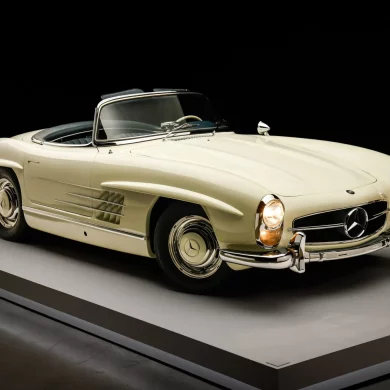
Lot # 124 1934 Packard 1108 Twelve Dual Cowl Sport Phaeton, Body by Roxas; S/N 901-982; Dark Blue/Beige leather; Estimate $375,000 – $450,000; Rebodied or re-created, 1 condition; Hammered Sold at $290,000 plus commission of 10.00%; Final Price $319,000 — Car number 1108-280. Solar vee-lens headlights, chrome wire wheels, wide whitewalls, dual windshields, teardrop front and rear fenders, concealed spare. Conceived and executed by Fran Roxas to his usual extremely high standards using one of the three original examples as the template. Still nearly concours ready. There are several similar reproduction dual cowl sport phaetons on V-12 chassis around, but probably none done and maintained to the standards of this one. It is a gorgeous automobile and the new owner was spotted proudly driving it around Auburn the day after the auction. A superb automobile at a modest price.Lot # 129 1949 Buick Super Convertible; S/N 45106533; Sequoia Cream/Red leather, Beige Bedford cord; Black cloth top; Estimate $90,000 – $110,000; Recent restoration, 2 condition; Hammered Sold at $67,273 plus commission of 10.00%; Final Price $74,000 — Dynaflow, hubcaps, sombrero trim rings, pushbutton radio, turn signals, grille guard, skirts, P/W. Very good paint, chrome and interior. Restored like new and in pampered, showroom condition. Chassis is like new and nearly spotless. Driver’s door doesn’t close flush, but that’s more the fault of the ’49 Buick’s bulky doors than the restorer. Bid to $65,000 on the block and closed post-block at this result, a big, powerful, beautifully restored Buick that embodies the style and luxury of these cars. Cadillac quality and design for Buick money and a good value at this price.Lot # 130 1936 Packard Super Eight 1404 Convertible Victoria; S/N 947225; Engine # 757479; Red/Saddle leather; Tan cloth top; Estimate $110,000 – $140,000; Older restoration, 2- condition; Hammered Sold at $84,000 plus commission of 10.00%; Final Price $92,400 — Body color wire wheels, trim rings, hubcaps, radio, heater. Very good paint, chrome, interior and top. Chassis has a little oily residue and dirt that could easily be detailed to show, this is nearly show-ready as it sits. The color stands out, maybe a little too much, but the quality of the restoration and its preservation are outstanding. A CCCA Full Classic ™ with panache, it was a good value at this price.Lot # 131 1941 Packard 120 Station Wagon, Body by Hercules; S/N 14932005; Maroon/Saddle leatherette; Estimate $110,000 – $130,000; Unrestored original, 3 condition; Post-block sale at $88,182 plus commission of 10.00%; Final Price $97,000 — 3-row seating. All original body, paint and interior (middle seat re-covered long ago.) Extensive mechanical work in ’09-’10 to make it run and drive well with over 2,000 miles since. A recent barn find that has been preserved in all respects as it was delivered 61 years ago, then sympathetically mechanical dealt with to return it to good running condition. A real find even though the wood is visibly aged and warped in some places. Bid to $90,000 on the block and sold post-block at this all-in price, this Packard is far too sound and original to waste money on a pointless restoration. Driven and enjoyed as the sellers did it will return years of satisfaction and sound value for the money it brought.Lot # 133 1934 Pierce-Arrow 840 A Silver Arrow Coupe; S/N 2580001; Two tone Green/Green leather; Estimate $200,000 – $250,000; Older restoration, 1- condition; Not sold at Hammer bid of $170,000 — Orange wire wheels, wide whitewalls, dual enclosed sidemounts with mirrors, Dawley headlights, archer radiator mascot. Concours quality 1994 restoration of a rare and spectacular automobile. Still in like new condition. CCCA Premier (#1874), AACA Senior, Grand National 1998, first in class at Pebble Beach (with a 100 point perfect score), Meadow Brook and several other top-shelf concours. The first Silver Arrow coupe built, with a restoration that has stood up for nearly two decades and still will show well. This old girl has been around, selling at RM Meadow Brook in 2003 for $242,000 and RM Hershey in 2009 for $187,000. It looks like another few dollars could have closed the deal, but close only counts in horseshoes and hand grenades.Lot # 135 1934 Auburn 12 Salon Cabriolet; S/N 1091F; Black, Silver/Black leather; Black cloth top; Estimate $350,000 – $450,000; Concours restoration, 1- condition; Hammered Sold at $430,000 plus commission of 10.00%; Final Price $473,000 — Chrome wire wheels, wide whitewalls, dual sidemounts with mirrors, metal trunk, rumble seat, Pilot-Rays, chrome hood vent trim, Philco radio. ACD Category One certified original engine, chassis and body. Excellent older paint, chrome and interior. Restored to factory standards and finishes but with better paint and chrome with only 547 miles since it was completed. Windshield post chrome is weak and minor stretching on the seat cushions attests to its restoration’s age. The 2008 ACD Festival program cover and poster car. Enthusiastically pursued by the Auburn Auction bidders to this healthy but fully deserved price.Lot # 138 1953 Oldsmobile Ninety-Eight Convertible; S/N 539M5462; Red/White, Red leather; Beige cloth top; Estimate $70,000 – $90,000; Recent restoration, 2 condition; Hammered Sold at $65,000 plus commission of 10.00%; Final Price $71,500 — Wire wheel covers, wide whitewalls, automatic, radio, heater, skirts, P/S. power seat, P/W, Autronic Eye, windshield washers. Restored like new with excellent paint, chrome, interior and top. An impressively, accurately restored Olds in showroom condition. This price is generous, but appropriate to the quality and rarity of this Olds 98. The only way it gets any better is to be a Fiesta.Lot # 141 1934 Packard 1101 Convertible Coupe; S/N 378583; Silver, Burgundy accent/Violet leather; Beige cloth top, Burgundy piping; Estimate $175,000 – $225,000; Older restoration, 1- condition; Hammered Sold at $138,182 plus commission of 10.00%; Final Price $152,000 — Burgundy wire wheels, trim ring, whitewalls, dual sidemounts with mirrors, rumble seat, trunk rack, radiator stoneguard, Pilot-Rays, heater. 1994 AACA National First Prize restoration still with excellent cosmetics. Impressively detailed and sharp. Bid to $135,000 on the block and closed later at this all-in price. Worldwide sold this car at Hilton Head in 2006 for $176,000 and it’s hard to imagine it isn’t as good today as it was then. The bidders might have been a little put off by the catalog mistakenly calling it a Convertible Victoria but in the end the new owner took home a high quality classic at a good price.Lot # 143 1932 Buick Model 96C Convertible Coupe; S/N 2624272; Red, Black fenders/Black leather; Tan cloth top; Estimate $90,000 – $110,000; Older restoration, 3- condition; Hammered Sold at $80,000 plus commission of 10.00%; Final Price $88,000 — Red wire wheels, trim rings, dual sidemounts with chrome rings and mirrors, rumble seat, remote Sportlight, Trippe lights, clock, no heater. A tired but sound old restoration. Blistered paint, failing interior wood varnish, good interior and top. The restoration’s age shows but is still up to decent touring standards. Sold by RM at Hershey in 2009 for $74,250 and even at this moderately elevated result a sound car for a sound price.Lot # 146 1960 Chevrolet Corvette FI Convertible; S/N 00867S102892; Engine # 102892 F108CR; Red, White coves/Black; Estimate $90,000 – $110,000; Visually maintained, largely original, 3 condition; Not sold at Hammer bid of $52,000 — 283/250hp fuel injection, 4-speed, spinner wheel covers, P205/75R15 radial whitewalls, cassette stereo. Bad trim chrome, scratched windshield, wet sanding runoff in engine compartment. Not a bad car, just not a good one. The owner somehow thinks “fuel injection” will cause bidders to overlook the mediocrity of this Corvette’s presentation. It was reported bid to $65,000 at Mecum Indy three months ago and maybe now the consignor will get the message that is clearly being stated.
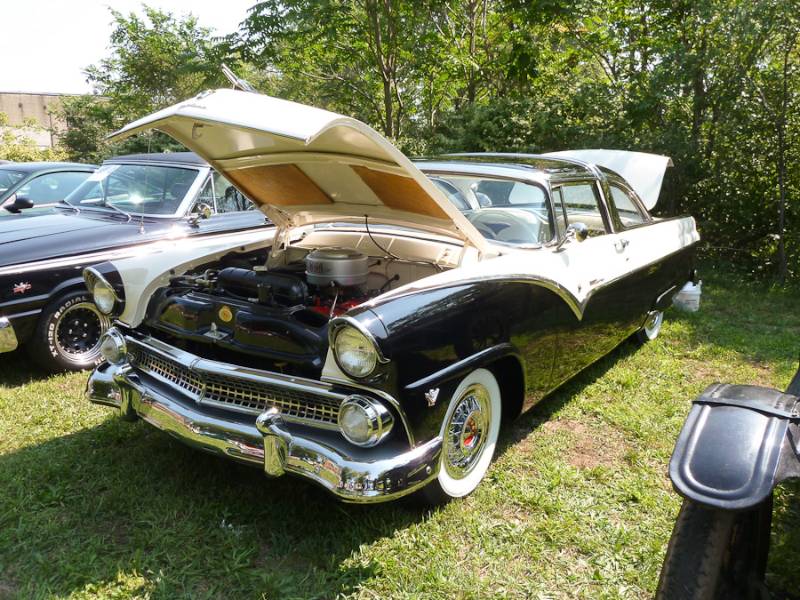
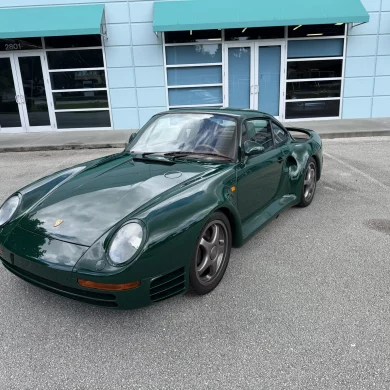
Lot # 150 1937 Packard Twelve 1508 Convertible Sedan; S/N 1073239; Dark Blue/Blue leather, Blue-Grey cloth; Blue-Grey cloth top; Estimate $300,000 – $350,000; Concours restoration, 1 condition; Not sold at Hammer bid of $220,000 — Steel wheels with hubcaps and trim rings, wide whitewalls, dual enclosed sidemounts with mirrors. Single family owned since 1959, restored in 2010 and winner of its class at Amelia Island, Indianapolis, Cincinnati, Lexington, St. John’s and Dayton. Best in Show at the 2010 Dayton Concours. It is still clean and better than new, an outstanding example of an elegant open Packard. It’s easy to see why the owner declined this high bid for such a superb Packard Twelve, but the value expectation may be unduly tinged by the car’s family history. It warrants an adjustment of expectations.Lot # 152 1973 Porsche 911S Coupe; S/N 9113300120; Engine # 6330205; Irish Green/Black leather; Estimate $110,000 – $130,000; Cosmetic restoration, 3+ condition; Hammered Sold at $114,000 plus commission of 10.00%; Final Price $125,400 — Factory A/C, high capacity gas tank Blaupunkt stereo, Fuchs wheels, Pirelli blackwall tires, original tools and jack. Decent repaint and interior, scratched aluminum bright trim, orderly and fresh engine. Underbody and suspension are repainted but not restored. The important pair of features on this Porsche are ‘S’ and ‘A/C’, a very rare combination that brought it a lot of attention in the preview and even more on the auction block. It’s rare to find a 911S that is this original, too. The bidders and the seller reached an accommodation that is reasonable to both.Lot # 155 1933 Packard Super 8 1004 Victoria Convertible, Body by Dietrich; S/N 66727; Engine # 7506; Light Yellow, Brown fenders and accent/Saddle leather; Brown cloth top; Estimate $140,000 – $160,000; Older restoration, 3 condition; Hammered Sold at $110,000 plus commission of 10.00%; Final Price $121,000 — Orange wire wheels, wide whitewalls, dual enclosed sidemounts with minors, Trippe light, vee lens headlights, built in trunk, trunk rack, smokers’ kits. Early 80’s restoration for Packard collector ‘Doc’ Clark in a livery typical of the time. Good older paint, chrome and interior. Attractive interior wood with burled instrument panel and striped garnish moldings. Bad orange peel on cowl vent. A sound old restoration. The muddy colors don’t enhance this Dietrich bodied Packard’s presentation, but that is reflected in its price. It sold for $102,300 at RM Amelia in 2000, then was reported sold at Spring Auburn in 2001 for only $78,970. The result here is indicative of its inherent value, even with the dated colors.Lot # 157 1935 Plymouth PJ Convertible; S/N PJ221062; Maroon, Black fenders/Maroon leather; Light Beige cloth top; Estimate $40,000 – $50,000; Older restoration, 3- condition; Not sold at Hammer bid of $34,000 — Whitewall tires, rumble seat, enclosed rear spare. Cracked, shrinking paint, good interior and major chrome. Pitted interior trim. Instruments not done. Torn, faded top. Pitted hood ornament. Usable as is but showing age. The ’35 Plymouths’ five round hood side vents highlighted by three thin streaks of chrome is delicious Art Deco, but this Plymouth needs attention in any number of ways and is no more than a marginally presentable driver in its current condition. It should have been cut loose at the reported high bid.Lot # 158 1913 Peerless Model 48-Six Roadster; S/N 13269; Blue/Black leather; Black cloth top; Estimate $350,000 – $550,000; Older restoration, 2- condition; Not sold at Hammer bid of $245,000 — RHD. 578 cubic inch T-head six, 4-speed, Warner speedometer and clock, Gray & Davis headlights, cowl lights, dual rear spares, 37 inch wheels. A famed Peerless, helicoptered off a mountaintop mine in 1966 as an engine and chassis after years of neglect following even more years of use as a stationary power plant. Concours restoration now with reproduction coachwork and showing some age but still exceptional paint, upholstery and nickel trim. It needs a better detailing. Sold by RM at Monterey in 2008 for $330,000, then at RM Hershey in 2010 for $200,750, this old girl is an arresting presence. Cleaned up a little better she should do better at auction, but the estimate is decidedly optimistic.Lot # 160 1923 Rolls-Royce 20 Roadster; S/N 50S6; Cream/Tan leather; Tan cloth top; Estimate $115,000 – $135,000; Older restoration, 3+ condition; Not sold at Hammer bid of $70,000 — RHD. Nickel brightwork, Marchal lights, rumble seat, rear-mounted spare, Smiths rim wind clock. Flared clamshell front fenders, body color centerlock wire wheels. Shaky body history but possibly original to the chassis and almost definitely dating to the Thirties but with later fenders. Sound old restoration with years and miles on it but appealing and certainly intriguing. Freshly detailed and sharp. Sold at Bonhams Scottsdale auction in January for $71,730. An intriguing car that occupies an interesting place in the evolution of Rolls-Royce, not the least because of its sporting roadster coachwork. The reported high bid was nearly enough to buy it.Lot # 161 1955 Chevrolet 3100 California Stepside Pickup; S/N H255S036446; Red/Beige leather; Estimate $60,000 – $80,000; Customized restoration, 1 condition; Hammered Sold at $52,500 plus commission of 10.00%; Final Price $57,750 — 350 GM V-8, throttle body injection, tube headers, Richmond 5-speed, P/S, alternator, A/C, red reversed steel wheels, trim rings, whitewalls, black cloth bed cover, cassette stereo, rack and pinion steering, chrome bumpers. An absolutely magnificent stock-appearing Chevy stepside with all the modern conveniences built into it. Excellent paint, chrome and interior. As good as it gets other than some dust on the undercarriage. This Chevy was done everywhere and everything about it was done right, from the Viper Red paint and leather upholstery to the undercarriage and suspension. The new owner is going to have bragging rights anywhere this Chevy appears and it should drive as well as it looks. $10,000 more would not have been out of line, it’s that good.Lot # 162 1931 Cadillac 370-A V12 Convertible Coupe; S/N 101039; Black, Dark Grey/Black leather; Black cloth top; Estimate $175,000 – $200,000; Older restoration, 2- condition; Hammered Sold at $210,000 plus commission of 10.00%; Final Price $231,000 — Chrome spoke wire wheels, wide whitewalls, dual sidemounts with mirrors, remote spotlights, luggage trunk, Trippe lights, radiator stone guard, rumble seat. One of 12 known to survive with this body style on the V-12 chassis. An excellent older restoration in 1996 with excellent cosmetics and nearly concours-ready. Sold by Auctions America here in Auburn two years ago for $130,900. It brought near V-16 money here at the Auburn Auction and the seller should be overjoyed. It’s really exceptional.Lot # 163 1938 American Bantam Roadster w/Custom Wooden Boat and Trailer; S/N 11US0008083; Red, White/White vinyl; Estimate $55,000 – $65,000; Cosmetic restoration, 3 condition; Hammered Sold at $28,000 plus commission of 10.00%; Final Price $30,800 — Wind wings, skirts, single wiper, rear-mounted spare, whitewalls, headlight eye lashes, fog lights. Single seat boat with Elto Lightwin outboard. Sound paint, chrome and interior. Oily, grimy chassis. Cosmetically restored for fun, not for show. The disappointing presentation and superficial cosmetic redo doomed this impressively cute combination to a mediocre value that matched its condition. This is what it’s worth, but it has the potential to be worth more.Lot # 170 1991 Ferrari Mondial t Cabriolet, Body by Pininfarina; S/N ZFFRK33A4M0089215; Red/Tan leather; Black cloth top; Estimate $30,000 – $40,000; Unrestored original, 3 condition; Hammered Sold at $16,000 plus commission of 10.00%; Final Price $17,600 — CD stereo, A/C, modular 17 inch wheels. Sound but aging original paint, soiled driver’s seat, scratched black exterior train. Loose, cracked side vent strakes. 66,681 miles from new, but they were not easy miles. No Reserve. Mondials just don’t get any respect even as collectors clamor to put quarter million dollar plus 246GT Dinos in their garages. A late addition cataloged in an addendum, it brought a modest result but one that handicaps its lack of any service documentation.



 There couldn’t be a better venue for The Auburn Auction by Worldwide Auctioneers than the Auburn Automobile Company’s L-29 Assembly Building, now the site of the National Automotive and Truck Museum of the U.S.





Rick, I’d like to suggest a change in the format for your reports. It is jarring to me to be reading your narrative and see the name of the collector or collection selling the car stuck haphazardly in the middle of it. Why don’t you put it up front, in the basic description of the vehicle – maybe just after its year and description?
Also, do you HAVE to go through all the machinations of how the bidding went and how much the commission was? It matters not to me whether the commission was 12% or 15% – just the sale price.
Thomas,
Cogent observations and suggestions. Long answer follows.
The auction reports are contained in a database which has two narrative elements: Notes where the cars are described and Comments where the observations on the transaction itself go. They are merged in the final report you read on SCD.
I’ve always dropped the collection identity and when applicable ‘No Reserve’ in at the end of the Notes where they finish off the facts before getting to the subjective observations.
In fact, you’re right, though, they really relate to the transaction data at the beginning of the report.
Point well taken, and I’ll endeavor to implement it.
As to the transaction details (hammer bid, commission, final price) we differ.
I think the details, the hammer bid, the transaction results like hammered sold on the block, post-block sale, charity transaction and several more — including the dreaded ‘No bidding interest shown’ — and the buyer’s commission paid are important to presenting the transaction in context.
My feeling, and the point of view I’ve taken in the auction reports, is that the hammer bid relates to what the buyers think the car is worth. The commission paid is part of the buyer’s process costs, like transportation home, related taxes, the cost of travel to the auction, etc. It’s no different than hitting five stores (including gas and time) or canvassing websites for an hour in search of an object that is both right and at a price that makes sense. Or paying a broker, agent or inspector to find, vet and inspect a car before it is bought. The process costs, in this case the commission paid, is relevant, but not the only element in the buyer’s process.
Furthermore, if you’re a prospective buyer, telling you a car sold for, say, $117,000 by itself might lead you to conclude that’s where the bidding stopped. Not knowing the commission would obscure the information that the successful bidder in fact stopped at $100K at a Bonhams sale, $106,400 at RM or Gooding, or $110,400 at Mecum.
In other words, both numbers — hammer bid and final price including commission — are relevant. It’s why the summary numbers in SCD auction reports reflect lots sold for hammer bids under low estimate and over high estimate, not the final, commission-included, amounts.
In this presentation format, if hammer bid and commission don’t matter to you, you can ignore it. The data is there for either point of view and I’ll continue to present it that way.
Thanks for opening my eyes on the first point, and giving me an opportunity to elaborate on the second one.
You’re welcome, Rick.
I did not mean to imply that I’m the only one interested in the price and circumstances surrounding the auction of the vehicle. However, I think that those who are – whether first timers or grizzled old pros – understand the mechanics of the auction, and the fact that a buyer will pay a commission. So, spelling it out is fine, but may be a bit of overkill? As to the process of the bidding, and your comments concerning the proces (no interest shown, not sold, etc.), they must be in your report, and we don’t differ on that one iota – or farthing, depending on your location.
I will continue to read the reports for your concise analysis and commentary – plus the occasional dash of humour, which is reflected also in your response!
Thanks for doing the job you do so well.