


The Goodwood Revival – The Best Place on Earth to See the Things We Love
By Ned J. Lawler | Photos by Ned J. and Kate Lawler, Shamrock Motoring Images
(Note: Part One found here)
Part Two – Hallowed Ground
“Never in the field of human conflict was so much owed by so many to so few,” uttered Sir Winston Churchill after a few minutes reflection on his experience at RAF Uxbridge. He had spent August 16th 1940 in the bunker housing the Operations Room of the RAF Group 11 following the battles of the day. Four days later his speech to the House of Commons was framed by this thought. The Battle of Britain airman of the RAF were to become known as “The Few” as a result of Sir Winston’s observation.
The Battle of Britain was the air war waged against the British Isle by the German Luftwaffe from 10 July to 31 October 1940. Luftwaffe Field Marshal Goring had convinced Hitler that Britain could be captured by air. “The Few” had proved Goring wrong, motivating Hitler to move his attention to the Western Front and cancel plans for the amphibious invasion of England, Operation Sea Lion. The timber of Churchill’s proclamation was significantly reinforced as history unfolded.
To explore how “The Few” relate to the Goodwood estate, we will begin in 1938.As the winds from the East began to darken the skies, the Air Ministry set about conscripting strategic flat sections of land to be used as emergency landing fields. Goodwood had such a field adjacent to the hamlet of Westhampnett. This area, along with a similar tract located near Merston, was to augment the established RAF Tangmere base. The three locations were on the corners of a triangle with each leg about two miles long, Westhampnett at the top, Merston straight south, and Tangmere on the vertex to the east. Information on the excellent museum at Tangmere can be found at www.tangmere-museum.org.uk. The field at Merston was subject to becoming waterlogged and occasionally its support activity needed to be moved to RAF Westhampnett. Shortly before the Battle of Britain, the Goodwood field status was raised to that of a satellite airfield. At this point the Air Ministry started to put in minimal facilities to support plane maintenance and house the pilots and crews.
On the 23rd of July 1940, the battle-tested 145th Squadron ferried their Hurricanes from RAF Tangmere to be the first unit operational from RAF Westhampnett. The opening shot of the Battle of Britain was fired from Squadron Leader John Peel’s Hurricane after taking off from the base on the Goodwood estate on 8 August 1940. In his encounter he inflicted damage on three German fighters.
During the wet Winter of 1940-41 it became obvious that if this base were to continue to be used, a service road would need to be built to allow the fuel and service vehicles to reach the planes and provide a solid pathway for the fighters to the airstrips. There is some debate as to exactly when the “hard standing” was laid; however, there are 1941 Air Ministry aerial photos of the base that show the ring road in place. This was the foundation of the present track. Since the planes were spread around the perimeter of the field, the layout of the road followed the topography to connect all the circular pads that were the planes’ parking spots. Today the trapezoidal aprons from the road to the parking pads still line the Lavant Straight. This perimeter path created the curves and straights of the Goodwood Motor Circuit.
From the first shot of the Battle of Britain to the first wave of air support for D-day, the Goodwood farm field hosted Belgian, French, New Zealander, Polish, Canadian, and American units along with Royal Naval Air Service and RAF Squadrons. While Spitfires were the most populous Goodwood plane, the early victories in the Battle of Britain were delivered by Hawker Hurricanes. During the 6 years of operation, from 1940 until the base was decommissioned on 13 May 1946, most of the arsenal of Allied fighter planes stirred the Goodwood grass. This included, of course, Hurricanes and Spitfires augmented by Tigercats, Typhoons, Barracudas, Avengers, Tempests and P-51 Mustangs. The most noticed fighter was the Hawker Typhoon with its 24-cylinder 2100 hp. Napier Sabre engine. On full takeoff power, the noise in the surrounding area was ear shattering!
Lord March is very keen to convey the tremendous significance of the airfield to the War effort and allows time in the Revival schedule to pay moving and fitting tributes to that contribution.

The 2010 Goodwood Revival paid homage to the 70th anniversary of the Battle of Britain. On hand were 9 pilots that flew out of RAF Westhampnett. This group included one of the ladies who was a member of the civilian group, Air Transport Auxiliary (ATA), whose charge was to do all the non-combat ferrying of planes from the manufacturing plants to the designated bases or any other type of land based plane redistribution. The ATA was an “Anything to Anywhere” corp that logged over 400,000 flight hours during the war years which kept combat pilots on the front line. Each of the 9 pilots was gridded on the main straight in a WWII period vehicle and after a 7-shot canon salute, one for each decade, they were taken on a parade lap. The honorees were followed by a Hawker Hurricane and a Supermarine Spitfire taxing down the main straight. The applause was loud and spontaneous and the intensity of the moment and its significance could be read on the faces of the elder attendants.


Leading the military machines and following the band of the Royal Marines was a British Racing Green 4 1/2 liter Blower Bentley that belonged to William Meade Lindsley “Billy” Fiske III. His close friendship with Tim Birkin, Bentley Team 1929 Le Mans winner and father of the Blower Bentley, gave Billy the “in” for him to order a very special “Blower” with many features of the Le Mans winning cars. Billy was a larger-than-life character who was the son of a wealthy New York banking family and had been educated in Chicago and England. At the age of 16, he captained the American 4-Man Bobsledding Team to the Gold Medal at the 1928 Winter Olympics at St. Moritz and, 4 years later, he repeated the Gold at the Lake Placid, New York Olympics.
Since only British subjects could join the RAF, Fiske hid his American citizenship by posing as a Canadian to become a RAF airman. His worldly confidence, competitiveness and quick athletic ability made him a natural fighter pilot. After flight training he flew successful missions with the 601st Squadron out of RAF Tangmere with his first flight on 14 July 1940. On 16 August he nursed his damaged Hurricane back to Tangmere rather than bailout and lose a valuable fighter. As he approached the base, which was under attack, his aircraft caught fire. Billy landed but was burned. Although he was rushed to the hospital and it appeared that he would recover, he died the next day from shock. The legend is that the fighter he saved was returned to combat service within days.
Fiske is thought to be the first U.S citizen killed in air combat during WWII. During his short 27 days of active flying he flew 42 missions and damaged several German planes. Lord March, in his tribute to Fiske and the other flyers, noted that Flight Officer Billy Fiske was buried in the nearby Boxgrove Priory very near Lord March’s ancestors. He is remembered on his headstone with the inscription “He died for England” and in a stained glass window in the adjacent church.

The next vehicle in the tribute parade, a US Army Command Car, carried Squadron Leader Tony Gaze OAM DFC** (Order of Australia Medal, 3 Distinguished Flying Crosses awarded). Gaze, a successful post-war racing driver, was the catalyst in the conversion of RAF Westhampnett to the Goodwood Motor Circuit. We will revisit his involvement in the next chapter as Britain transforms from wartime activities to normalcy, which in this context, means motoring racing.

Goodwood Revival How and Why – Part Two, Page Two
Goodwood Revival How and Why – Part Two, Page Two
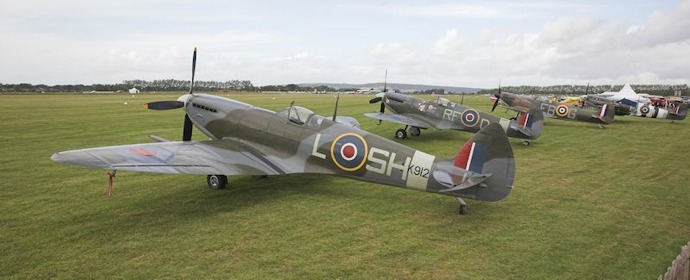
We can go no further without reporting the 2011 Revival Tribute to the 75th anniversary of the Supermarine Spitfire, whose legend is woven into the fiber of The Goodwood Revival. At each Revival there are period Allied aircraft on the field and in the air over the event. It is a defining moment; the first time and every time you hear the banshee wail of the centrifugal supercharger pumping gobs of air into the Rolls Merlin V-12 during a power dive. The skin shrivels and the hair rises and it gives you a momentary soundtrack of the dogfights during the Battle of Britain.
The construction of the Spitfire prototype, the Type 300 airframe # K5054, took place at the Supermarine works near Southampton, which is just over 30 miles WNW of Goodwood. On March 5th 1936, designer R. J. Mitchell and his team waited for Chief Test Pilot Summers of Supermarine’s parent company Vickers to arrive to evaluate the plane’s performance. Mitchell was a successful designer of racing planes and sleek K5054 looked every bit the racer. John “Mutt” Summers viewed the craft and strapped it on. It took him all of 15 minutes to test the flight characteristics of the airframe and land it. As the prop stammered to a stop, he dropped from the wing to an anxious group and proclaimed, “Don’t touch anything!!” The Spitfire was born. The original # K5054 was written-off in 1939 and scrapped; however, The Spitfire Society has a recreation of it and it was display at the Freddie March Spirit of Aviation, a fixture at the Revival since 2007. This presentation is a Concours d’Elegance for airworthy aircraft built prior to 1966. The gathering is adjacent to the flight line and features about 25 aerial veterans from a B-17 down to a glider. This is yet another feature of The Revival that, in itself, is worthy of your trip.


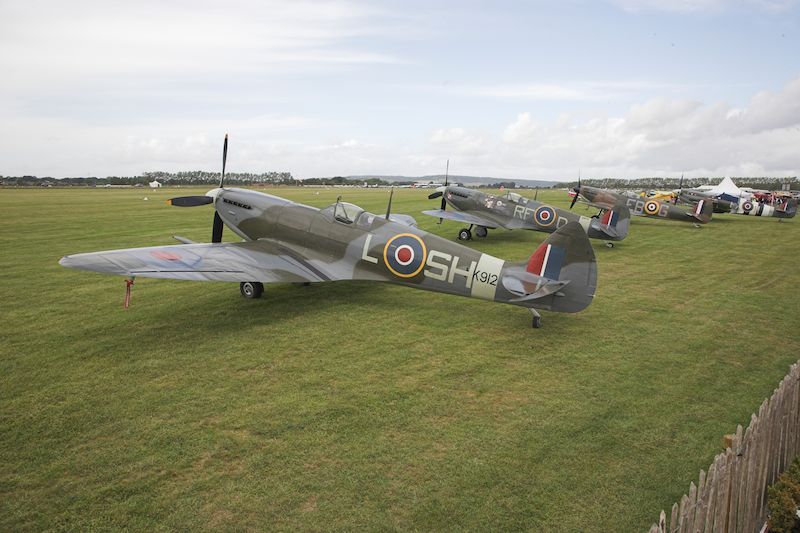


During the service life of the Spitfire there were 47 variations that had some combination of performance enhancement and combat adaptation. Each time one of the foes would make an improvement in their plane the opposition would answer to equal or better their aircraft. While not wanting to trivialize the grimness of the air war, one can see a parallel to the fierce nationalism that took place in pre-war Grand Prix racing where there were constant struggles to keep each country’s machinery more competitive.
The 2011 Revival featured at least 12 Spitfires and the prototype recreation of K 5054. During the Sunday afternoon tribute, a squadron of 10 Spitfires flew a formation around the track against a dramatic storm cloud background, yet another glimpse into the sights and sounds of the Battle of Britain.
We will leave the aerodrome now as it has been decommissioned as of May 1946 and in the next chapter we will see the metamorphosis of the site into the Goodwood Motor Circuit.


Visiting Goodwood
Now, let’s discuss your trip. Part One closed with the advice to purchase tickets early and that needs to be the first thing on your list since there are only advanced ticket sales and there are only a finite amount of tickets available. Go to www.goodwood.com to buy the tickets. Plan on the 3-day ticket since there is more than enough to see and do in three days. There is also a grandstand option that allows you to have seats in the grandstands located around the track. These seats are reserved seating for all the stands but the Lavant stand. As you order your seats, you can pick from available spots as outlined on the website. Personal experience is that there is far too much to see and do to sit in a grandstand, but the view from the stands is wonderful. To the delight of many, there are passenger wagons drawn by vintage tractors that go completely around the track. This allows you to hop on and off the trolleys at any number of vantage points along the track to find your favorite spot. This is a good thing to do on Friday to get your bearings. The 3-day general admission pass is £117 which is about $180.00 USD. What a deal when compared to three days of admission during Monterey week! Also note that ages 13 to 21 are half price and 12 and under are free. Study the order page carefully and get your order in.
While shopping for tickets, or even if you’re not, go to this link and order this DVD: Goodwood Revival DVD. The mission of these Chapters is to expose you to the aura of the Revival, but there are not enough words to explain the racing excitement. Get the DVD and gather with a group of car nuts and you will have an exciting evening, and understand the reason for all the furor around the great vintage competition.
The most challenging part of the Goodwood experience is accommodations. Now is the time to start. For a bit of orienteering, open maps.google.com and enter 50.85317, -0.72886 in the search box. This should place you at the intersection of A27 and Stame Road. From this interchange all traffic flows north and into Goodwood via New Road. New Road is converted to both lanes west for the morning and both lanes east for evening exit. This traffic pattern works well and attempts to short-cut the route are thwarted by closed intersections, so follow the Lord’s plan. The search for housing radiates out from this center point. When evaluating an accommodation location, the driving times on the “Get directions” mode of Google maps have proven to be fairly accurate. A27 is a Dual Carriage Way, which is British for 4-lane, and traffic usually moves well along it.
Start your search with optimism but keep in mind that most nearby rooms are filled with participants and long-time attendees that renew their reservations upon leaving the previous year’s event. However, schedules change and you may just happen into a cancellation vacancy. If you get inside a circle with a radius of 15 miles from the track entrance, you will have had a very successful search.
In planning your “carcation” keep in mind that there are enough things to do and see within 50 miles of Chichester to easily fill up a week, so arrive early in the week and get adjusted to the time and locale prior to the event. Keep in mind that booking a longer stay will make you more valuable to the room provider and could help land a spot. The National Motor Museum at Beaulieu and Sammy Miller’s motorcycle museum both lie to the west of Goodwood; so if you have accommodations in that direction, visits there could work out well. In future chapters we will present more places to go and things to do.
A tip in mapping your adventure, the UK postal codes are magic 7-character codes that take the form of xx## #xx. (It is easy to mix up the O and 0 when reading the code). By putting this code in the Google map search box, it will locate the address position very closely and this is important since English addresses are sometimes hard to decipher. These codes will also work well in GPS units which are a must for travel abroad.
There are chain hotels in the area, but to further enhance your British immersion, a stay at a Bed and Breakfast is worthwhile. They are run by folks that love to have guests and are enthusiastic and knowledgeable about the culture and area. Be advised that the quarters are sometimes a bit tight. Especially the bathrooms since, in many cases, they are added into the room to make an en suite accommodation. That being noted, the warmth of the lodging and the full English breakfast more than compensate. Most B&Bs are priced per person per night while some price per room, so be aware of that when you are checking prices. Costs are somewhere around £40/ person/night or about $62. On the websites below there are multiple listings of hotels and B&Bs and most have an email address. Direct email with your needs is an effective tool. Pick out several potential accommodations and send them an email. Usually the responses are very personal and the innkeepers will apologize for not having rooms if they are booked but may know of someone who has beds available. When you find a room keep in mind that some of the smaller B&B’s do not take credit cards; it is rare but they do exist. Most will require a deposit. For the few that don’t take cards directly a Paypal transaction should work. Keep in mind wiring money through a bank transfer can cost more than the deposit and bank checks are expensive as well.

The below sites are very helpful in identifying places to inquire for lodging:
www.chichesterweb.co.uk/08stay1.htm
www.visitsussex.org
www.visitchichester.org is the website of the Chichester Tourist Information Center. They will assist in finding rooms and can be reached at [email protected] or by
phone at 01243 775 888 when calling from the UK. Outside of the UK it
would be 441243 775 888.
These, as you will recognize, are chains that have hotels in the area. There are surely others but these are known.
www2.travelodge.co.uk
www.premierinn.com/en
Once again, you must make the decision now to get started on your adventure to insure that you will have all the necessary resources in place to have the “carcation” of your life.
To date we have invested five trips in gathering information and experiences to assist those of you that will make the Goodwood pilgrimage. In this quest we have visited automotive related sites, museums, historic attractions and several auto assembly plants. Enlightened auto companies realize that there is no better salesman than the enthusiasts and to gain that exposure both VW and MINI have provided press cars in conjunction with travel to their assembly plants. MINI provided a Cooper D which is their super economical, torquey Diesel MINI “original recipe” 2-door sedan. This little guy was more responsive off the corners that our personal Cooper S and delivered fuel economy in the high 40s US mpgs. Sadly, MINI has not started to import the “D” to the US but if/when they do grab one, all the fun and twice the mileage!
In an expedition to the Bentley Works, VW provided a Passat Diesel wagon for evaluation. This “shooting brake” proved to be an excellent travel companion. With a load of 750 pounds of people, clothes and cameras it delivered a real-world 37 miles/US gal. in over 1000 miles of touring on all types of English roads. With fuel cost in the range of $8.00 / US gallon it is easy to see why Diesel power is so popular in Europe. There is way too much historical stigma attached to these power plants. They are now easy to start, quiet, clean, and have torque at the low end where you can use it. If you are in the market for an economical partner in your travels, don’t make a purchase without investigating and driving one of the Diesel offerings that VW now builds and markets in the US.
Credit must be given to Doug Nye’s book Goodwood Revival The First Ten Years which captures the essence and the substance of the event and its history. It has been a great source for this writing and will give you great insight on the event and countless hours of enjoyment. It is listed on Amazon.
Another very interesting book, especially for those interested in WWII history, is Westhampnett At War written as a labor of love by three contemporary pilots, Mark Hillier, Dieter Sinanan and Gregory Percival, who are based at Goodwood. In this book they cover each squadron that was stationed at RAF Westhampnett and their adventures, many as told by the airmen themselves. The stories, along with extensive period photography, bring this East Sussex farm field’s contribution to the air war effort into focus.
In the closing of this infatuated Yank’s musings, it must be said that a huge debt of gratitude is owed Lord March for his vision and to he and his staff for the execution of “the best place on earth to see the things we love.” In your visit and involvement, you will experience the fruits of their labors and become a party to the debt.
[Source: Ned Lawler]
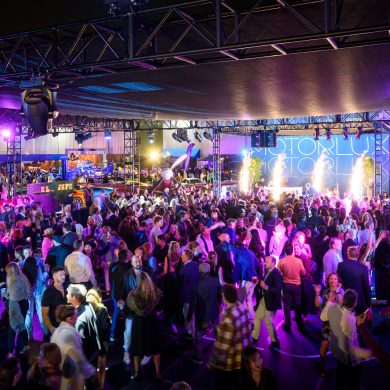
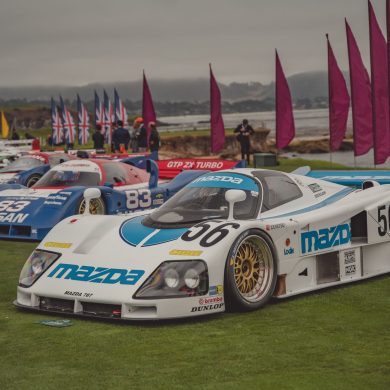
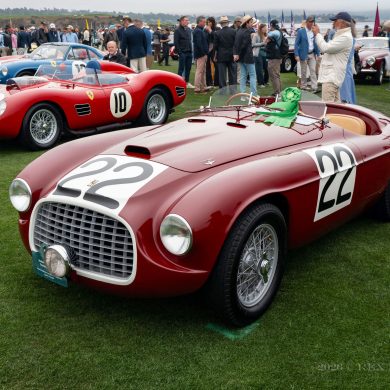
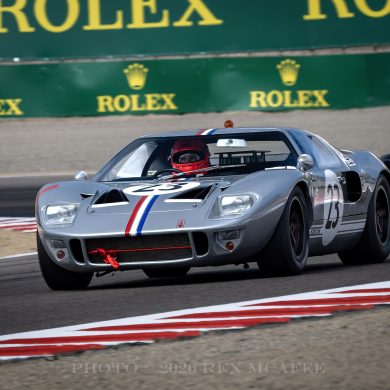

Well done Ned. Lots of research, lots of tasty details and excellent photos. This event is now a very solid fixture on the British calendar and is all about celebrating the joy of a bygone era. Just about everything there is real and touchable. How nice in these days of computer graphics to see’ hear and smell the real deal! At least younger people can now experiece what their Mums, Dads and grandparents could enjoy from1948 to 1967.
All of the above is very apparent in these articles. Looking forward to the next chapter …. lots more to learn!